Episode
Posted 6 may 2026

Gopi Krishnas Kundalini Almost Destroyed Him

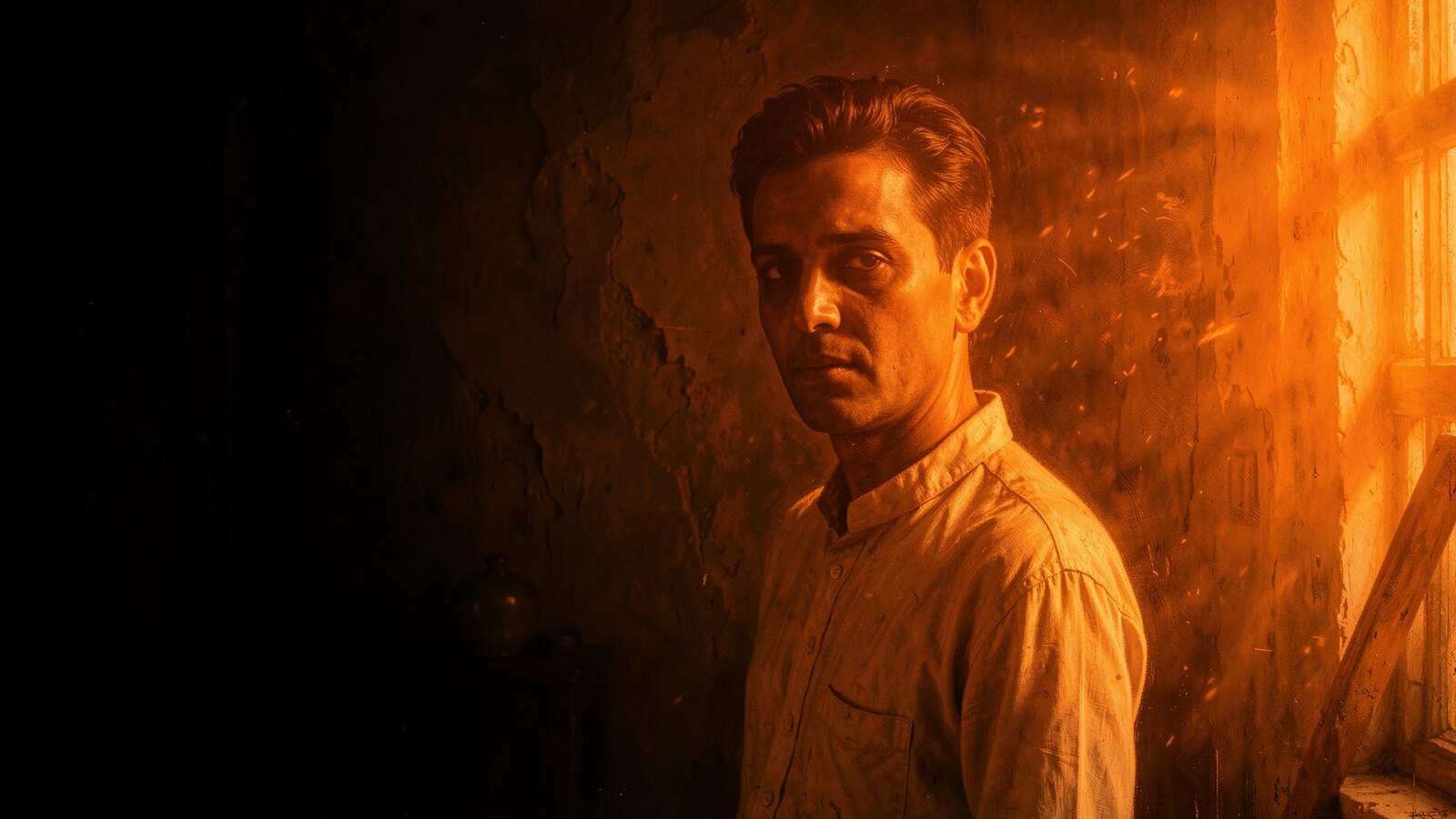
In December 1937, a thirty-four-year-old Kashmiri clerk named Gopi Krishna sat down to meditate before work and felt a current of liquid light tear up his spine. He did not become serene. He became ill.

Posted 6 may 2026
Watch on YouTube

The Wife Who Held the Room

Gopi Krishna sat down to meditate before work in December 1937. The thirty-four-year-old Kashmiri clerk fixed his attention on the point between his eyebrows, as he had every morning for seventeen years. Liquid light tore up his spine and flooded his skull. Serenity did not follow. Illness did. For twelve years afterward the clerk could barely eat, barely sleep, and barely hold a thought. The awakening Indian texts called liberation had become, in his body, a physiological emergency. No doctor in Srinagar was trained to read the chart.

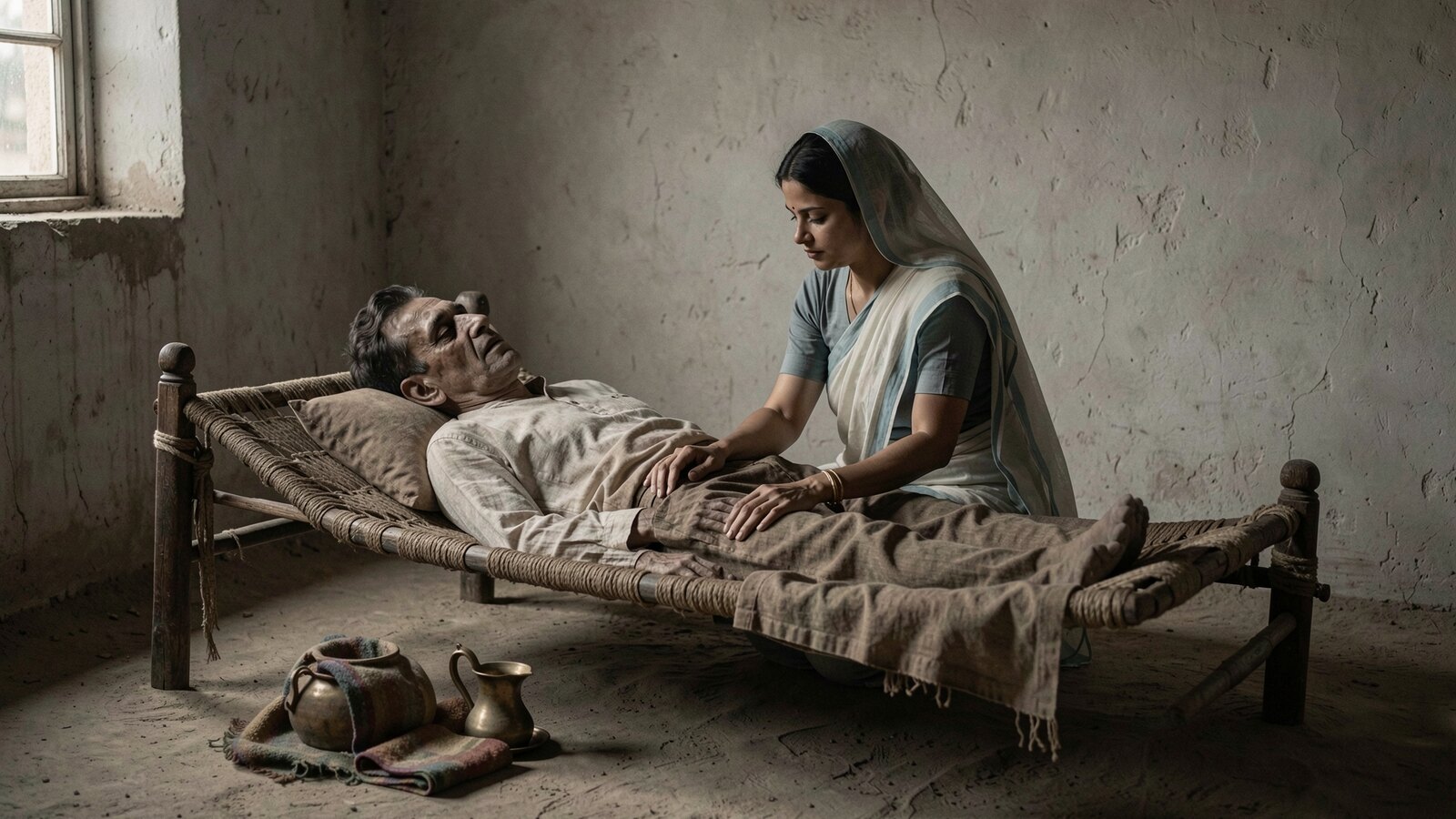
She fed him. That is the first fact to hold.

A Kashmiri woman kept the household standing through everything that followed, before the visions, before the verse in six unstudied languages, before the seventeen books. She kept the lamps trimmed. She kept the rice cool enough for a closed throat to swallow. Gopi Krishna's later story starts with a stream of liquid light entering his brain. Her story starts with a man who could not eat.

This essay sits inside the question her hands kept answering, day after day, for twelve years. What do you do when a quiet practice, repeated each morning for seventeen years without incident, suddenly breaks the body of the practitioner? What do you feed him? What do you tell the children? What do you tell the office? The mystical literature describes peace, dissolution, a settling into the ground of being. He got fire. The household had to live inside it.
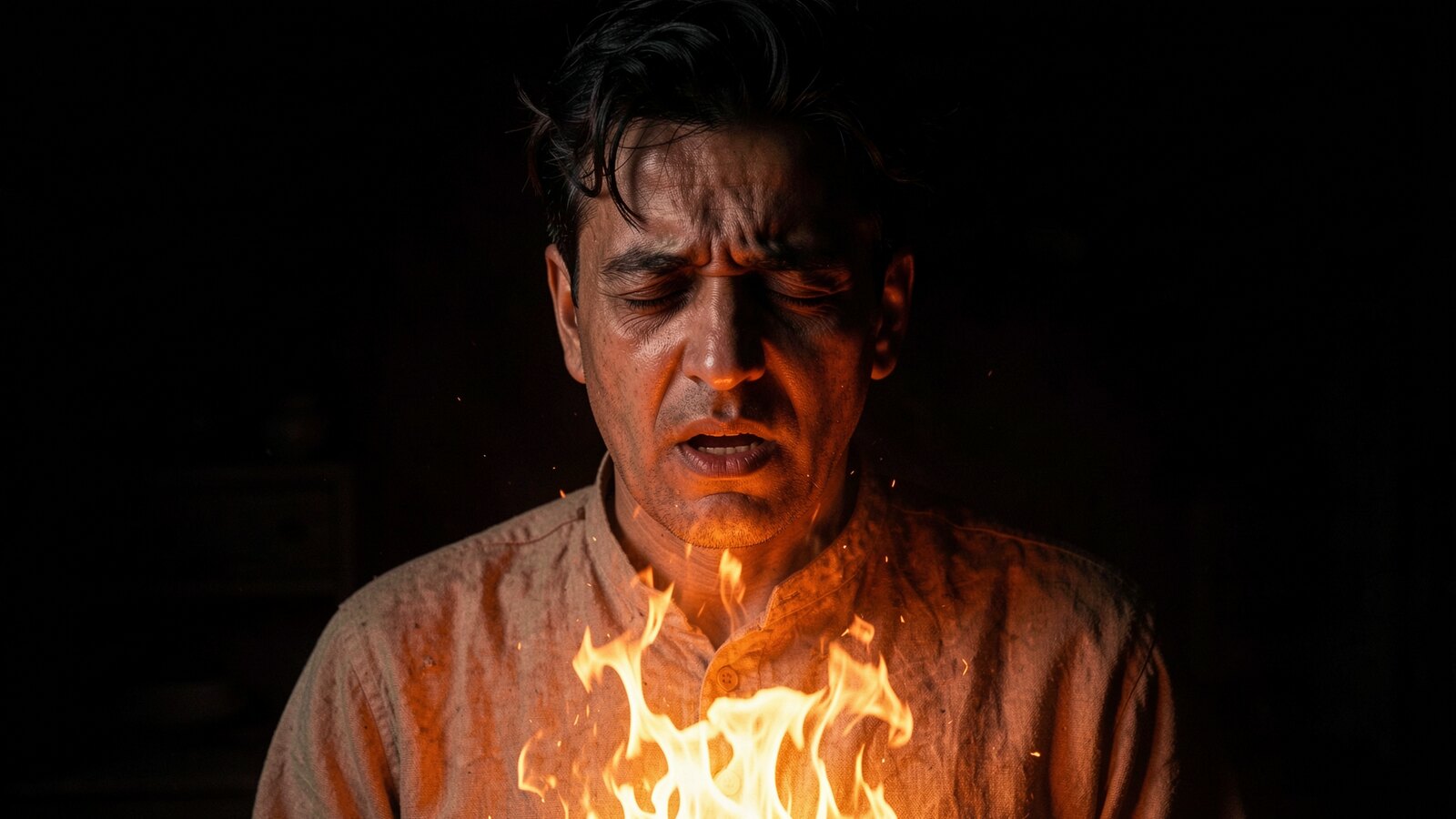
After: The Wife Who Held the Room image for gopi krishnas kundalini almost destroyed him

What Burning From Inside Looks Like at a Desk

The crisis lasted twelve years. That number is easy to write and almost impossible to feel. Twelve years is longer than a childhood. The span covers a world war, the partition of a subcontinent, the births of children, the deaths of parents, and the slow erosion of a clerk's standing under a condition he could not name.

He continued to go to work.

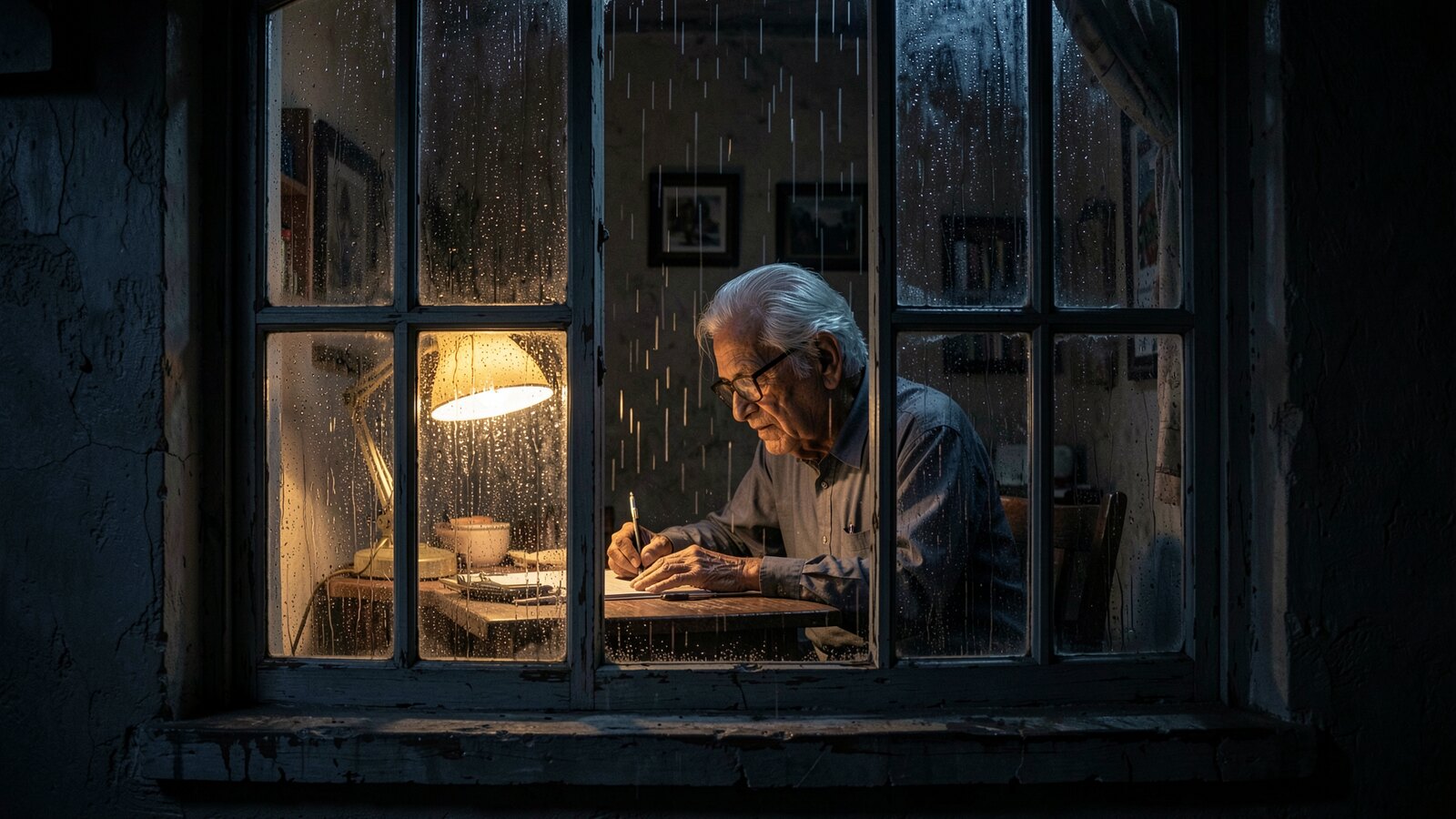
Picture the office: a stack of files, a glass inkwell, a wooden clerk's desk in a colonial provincial bureaucracy. Krishna sat there with a body that felt as if a charcoal furnace had opened behind his sternum and would not close. The heat was not metaphor. He described it in clinical detail, with the precision people use when they are trying to be believed. Internal burning travelled along the spinal cord. It broke into the skull. It gathered behind the eyes. Holding a pen turned each eight-hour shift into a daily ordeal of attrition.

Sleep failed. Long Kashmiri winters turned insomnia into its own private weather. The clerk would lie awake on a charpoy watching the ceiling beams pale into dawn, then rise, then walk back to the office. Food refused him. Digestion collapsed in stages, until cold rice, curd, and soft barley were the only preparations his body would accept. He lost weight he could not afford to lose. He hid the worst of it from colleagues. The alternative was a psychiatric file in 1939, 1940, and 1941, in a city that had no clinical vocabulary for what was occurring.

Mystical literature usually edits out the unglamorous middle. It is what happens between the moment of rupture and the moment of resolution, and it tends to consist of long stretches in which nothing visibly improves. The household stayed afloat on the salary of a junior civil servant. His wife kept the household afloat on everything else. She sold her gold bangles and earrings to the Srinagar bazaars when the salary thinned. The crisis did not relent. They did not have the money to stop working through it.

This is the texture the documentary frame compresses. Twelve years is not a montage. It is a desk, a copper bowl of cold rice, a sleepless ceiling, repeated until the calendar gives way.

After: What Burning From Inside Looks Like at a Desk image for gopi krishnas kundalini almost destroyed him

The Map He Did Not Have

Terror sharpens when no name exists for the thing causing it. Gopi Krishna had grown up inside a Kashmiri Hindu world that knew the word kundalini. The same world knew the schematic of nerve channels running parallel to the spine. It could speak, in the inherited vocabulary of Kashmir Shaivism, of the central sushumna and the solar pingala and the lunar ida. The clerk had read what was available to a junior officer in the 1920s and 1930s. The available shelf was not deep. Most of it spoke about the awakening as a goal devoutly to be wished.

None of it told him what to do when the energy was already loose and burning the wrong way through his nerves.

Traditional literature spoke of the risk only in warnings so compressed they read as superstition. Western medicine offered no diagnosis when Krishna eventually consulted it. A neurologist could see a thin, sleepless man and prescribe bromide and bed rest. A psychiatrist could see the same man and prescribe sedation. Neither could see what he reported seeing: a current of intense biological force routing through a channel that, in his framework, was not built to carry it.

Krishna came to read the crisis as a misrouting. The energy, he believed, had risen through pingala instead of sushumna. The result was a body cooking itself from the inside while it waited for the flow to correct. This reading is one man's interpretation of his own physiology, drawn from the only map he had. It is not offered here as a doctrine. It stands as the working hypothesis of a clerk trying to keep himself alive between morning prayers and the eight o'clock bus to the office.

The terror he described was not the terror of pain alone. It was the terror of incomprehensibility. Pain you can name is bearable. Unnamed pain asks the sufferer to invent the dictionary while still inside the fire.

After: The Map He Did Not Have image for gopi krishnas kundalini almost destroyed him

Silver Light, Foreign Tongues

After roughly twelve years, the flow shifted. He described this not as an achievement but as a spontaneous correction, the way a fever breaks. The internal heat eased into something more bearable. The insomnia loosened. The body, which had been a battleground, became a place he could live in again.

What was left behind was strange.

He saw the world through a thin, milky radiance. The light was not added to objects; it appeared to him as a property of seeing itself, a silvery wash that lay over the surfaces of things. A teacup at breakfast carried it. The snow on the rooftops of Srinagar carried it. His wife's hands, preparing food in the low light of a winter kitchen, carried it. He recorded the change carefully, without elation, the way one records weather.

And he began to write verse he had not chosen to write. Lines arrived in German, a language he had never studied. Lines arrived in French, in Italian, in Sanskrit. They came at odd hours, with the syntactic confidence of a tongue he had no biographical right to. He copied them down. He did not claim they were great poems. He claimed only that they were the prose of a body that had stopped behaving the way it used to behave, and that he was their stenographer rather than their author.

The temptation, in any account like this, is to round these phenomena into a triumph. He did not. He treated them as data. The radiance was a fact about his perception, not a halo around his head. The verse was a fact about his nervous system, not a credential. The man at the desk was still a clerk. The woman in the kitchen was still feeding him cold food when his digestion turned bad on a difficult day. Whatever had stabilised, it had stabilised inside an ordinary household, and the household went on.

After: Silver Light, Foreign Tongues image for gopi krishnas kundalini almost destroyed him

Why He Refused the Robe

A movement was available to him. Post-war India welcomed men with stories like his, and the West welcomed them harder a decade later. There were ashrams to be founded, saffron robes to be put on, photographs to be taken with seekers from California. Krishna had a memoir. He had a striking phenomenology. He had a wife who could have been written out of the frame and a household that could have been rebranded as a centre.

He chose otherwise.

The man kept his name on a book jacket and not over a doorway. Well into late life, he presented himself as a witness and a self-funded researcher, not a teacher. He wrote books, gave occasional lectures, and corresponded with physicists and Jungian psychologists. He tried, with the patience of a clerk who had spent a working life filing papers correctly, to interest the scientific community in his case. The case, in his framing, was a biological event with a measurable mechanism.

Krishna's thesis, stated in his own words, claimed kundalini as a real process running through the nervous system, the engine by which the human species evolves toward higher capacities. He thought this should be testable. The work should be funded, in his view. Careful physiological study might illuminate, across generations, what one frightened clerk in Srinagar had stumbled into alone.

Almost no one listened. The mystical literature was already crowded. The scientific literature had no shelf for him. Krishna died in 1984 still writing, still corresponding, still refusing the role that would have been easiest to accept. The refusal was temperamental as much as moral. A man does not develop a taste for being addressed as master after twelve years inside a furnace, fed by a wife pawning her gold to buy cold rice.

After: Why He Refused the Robe image for gopi krishnas kundalini almost destroyed him

A Note on the Book

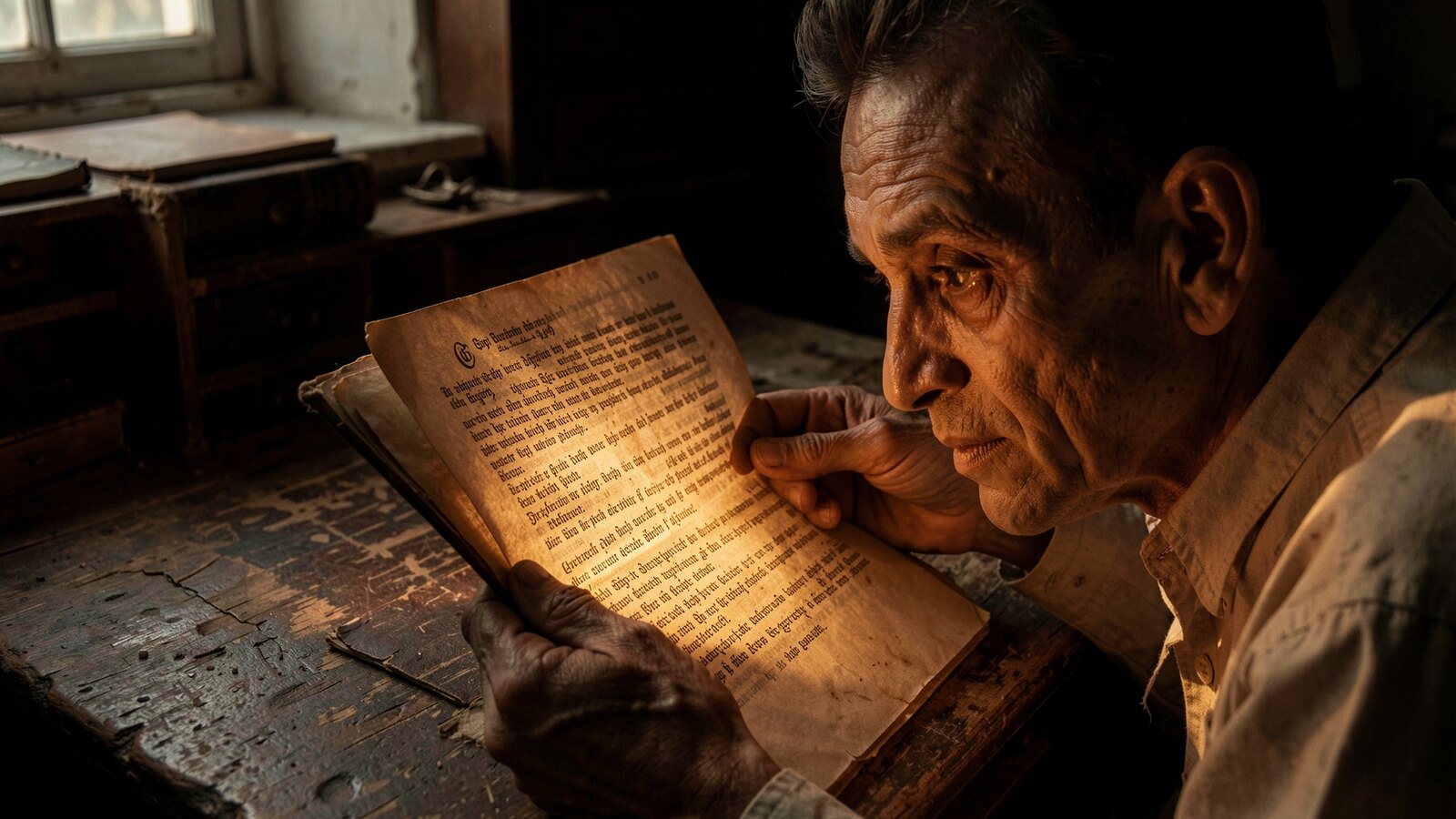
The primary record is his 1967 memoir, Kundalini: The Evolutionary Energy in Man, published in English with a psychological commentary by James Hillman appended at the back. It is the most physiologically detailed first-person account of an awakening crisis in the modern literature, and the prose is exactly what one would expect from its author: plain, careful, often flat, with sudden passages in which the reader feels the heat of the original event rising through the page.

Hillman's commentary reads it as the document of a man who has crossed a threshold the discipline of psychology has not yet learned how to chart. The reader who wants to sit longer with the fire than this essay allows should go there next, slowly, and with the woman in the kitchen kept in mind. He could not have written the book without her. He almost never said so on the page. The book exists because she fed him, in a small cold room in Srinagar, when chewing was beyond him and the worst years had not yet begun.

After: A Note on the Book image for gopi krishnas kundalini almost destroyed him