The shape of a thought that is given to you
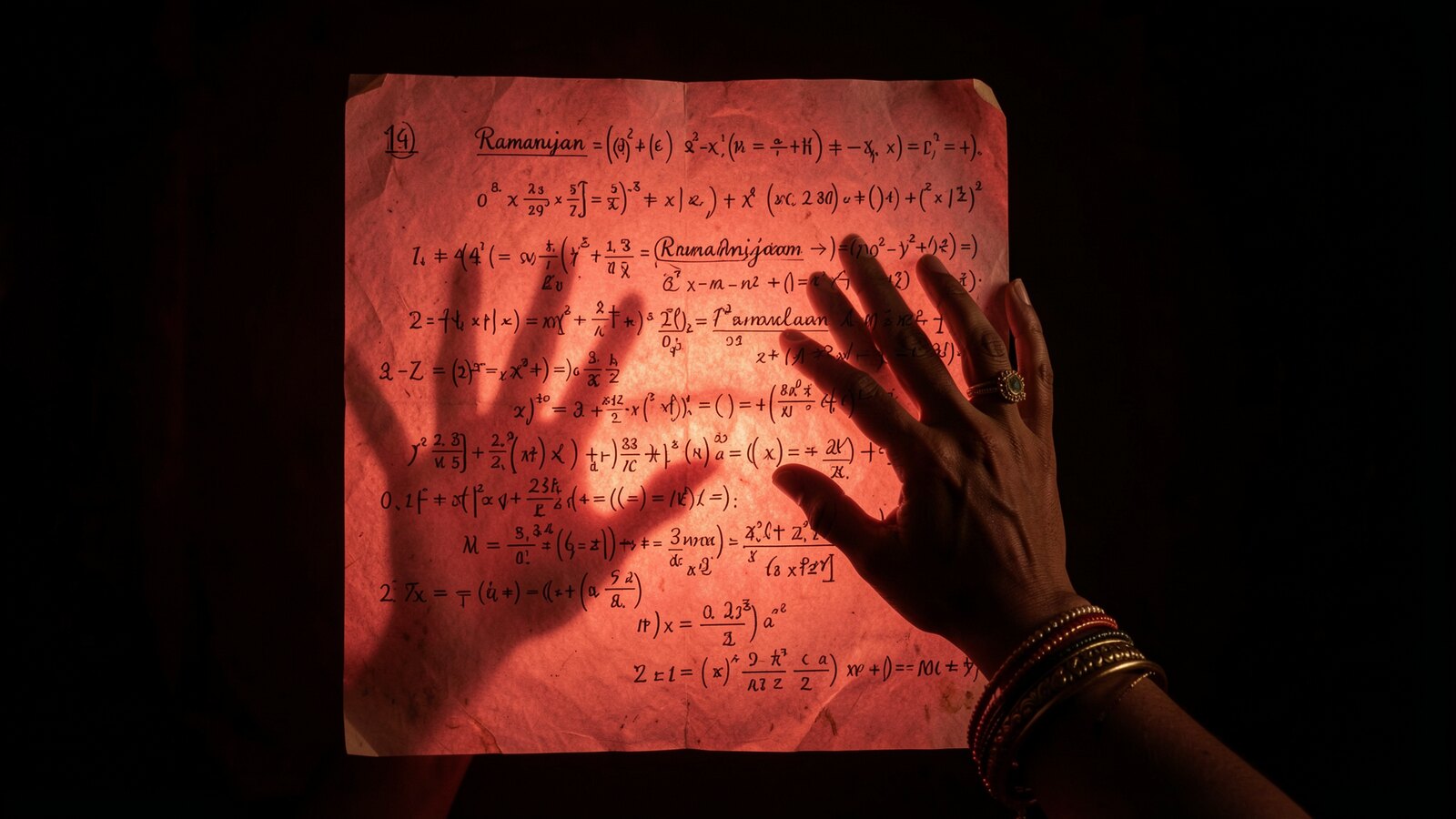
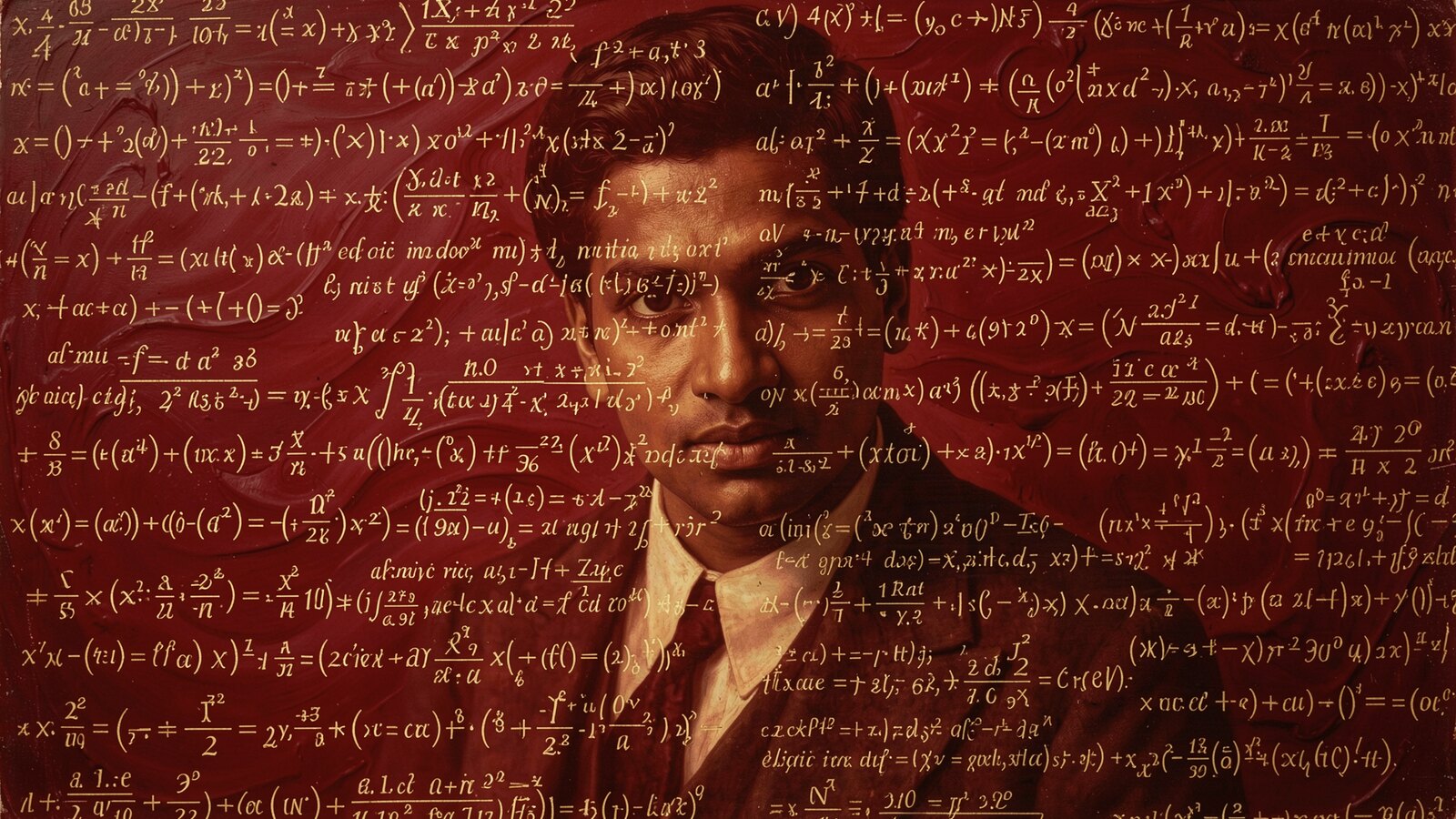
A Madras shipping clerk mailed 120 theorems to Cambridge in January 1913, none of them proved. He was twenty-five. The theorems covered the distribution of primes and the partition function, on loose paper, in a clerk's careful hand. G. H. Hardy opened the envelope. Hardy later wrote that several of the formulas were so strange he could not have invented them, and that they "must be true, because, if they were not true, no one would have had the imagination to invent them." The clerk's name was Srinivasa Ramanujan. Ramanujan said the goddess Namagiri placed the equations on his tongue while he slept, written by a divine hand on a red screen of flowing blood.
Hold the picture before reading further. Ramanujan did not work the equations out on paper first. He found them already standing there, written across the inside of his sleep.
Most readers have brushed against a paler version of this gift. A solution arrives in the shower. A name surfaces during the moment of giving up. A line of poetry walks in fully dressed. Call the cognitive shape of revelation the same: not the ladder of derivation but the delivered result. We tend to file these moments under luck, or under the unconscious, or under "the brain consolidating in sleep." Ramanujan stands at the limit case, a swimmer who lived inside the gift the way a fish lives inside water. He did not climb toward his theorems. They presented themselves on the page already true.
Two questions hold this essay together. What does it feel like to receive a mathematical result instead of thinking one through? And how can 1919 equations describe a black hole no physicist had yet imagined?