Gnosticism
Gnosticism
Posted 8 may 2026

The Glitch That Broke Philip K. Dick's Mind

A father, a pink beam, and a diagnosis no one had caught

Posted 8 may 2026
Watch on YouTube

The delivery at the door

In February 1974, Philip K. Dick opened his front door in Fullerton, California, to a delivery girl wearing a golden fish pendant, and a beam of pink light struck him. Weeks later, still under what he called the beam's tutelage, he drove his infant son Christopher to the doctor and reported a specific, undiagnosed birth defect: an inguinal hernia, hidden, strangulating. The surgeons confirmed it. The boy lived. Dick never recovered.

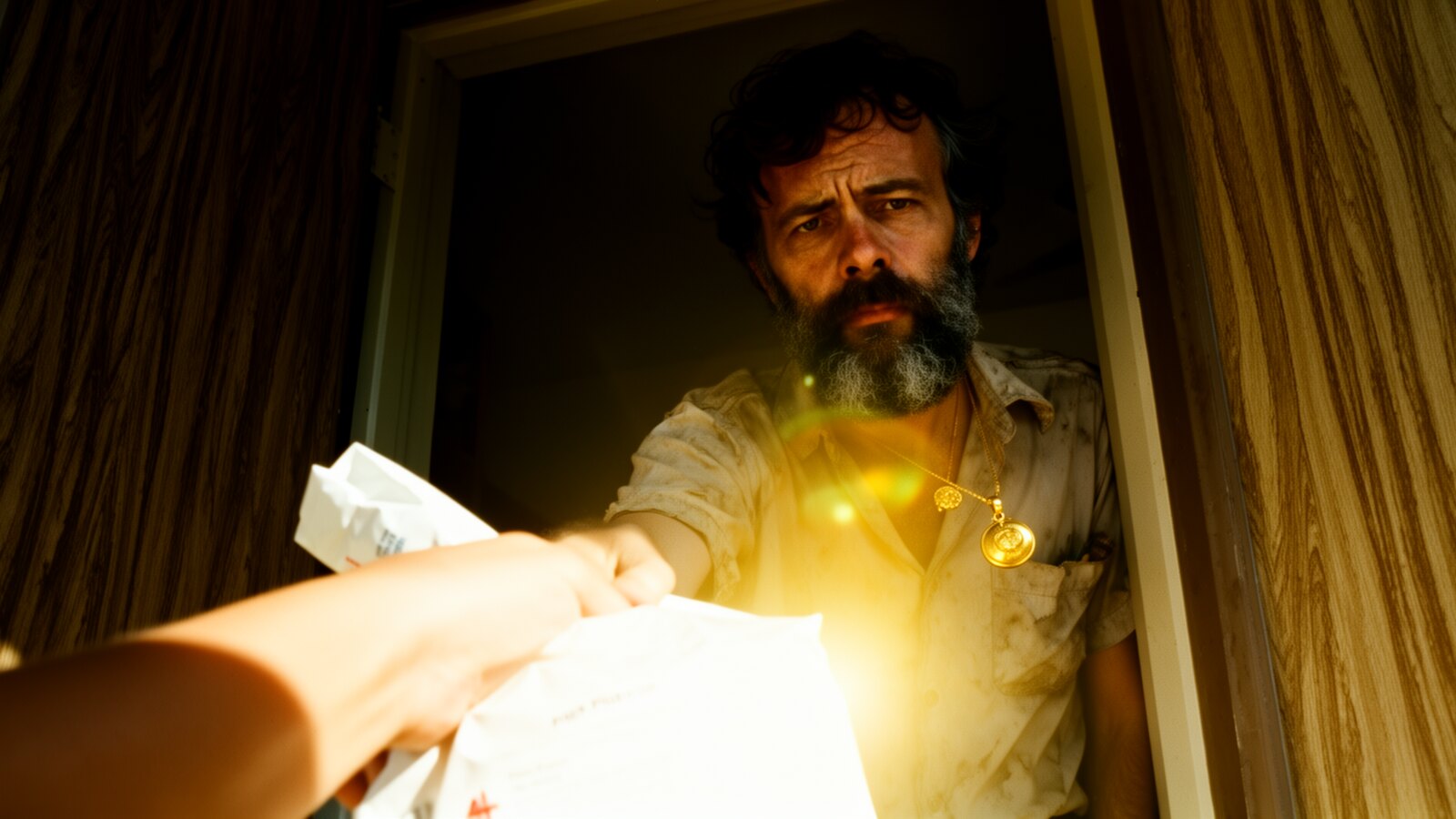
He opened the door. A young woman stood on the step with the pharmacy delivery, a paper bag with the analgesics inside. The late-winter light came in low across the walkway. She wore a thin chain at her neck, and on the chain was a small fish, two curved lines crossing at the tail. The Ichthys. The sun caught it.

A pink beam fired into his eyes.

He could not, afterwards, describe it as a metaphor. He described it as a beam. The light was pink, narrow, and directed, and it did not behave as ordinary glare behaves on the mind that receives it. He stood at the doorway with the pharmacy bag in his hand and felt something else arriving with it, a pressure inside the skull, the sensation of being addressed.

The delivery woman left. The door closed. Dick walked back into the apartment carrying the bag and carrying, as well, the first minute of an experience he would spend the rest of his life trying to name.
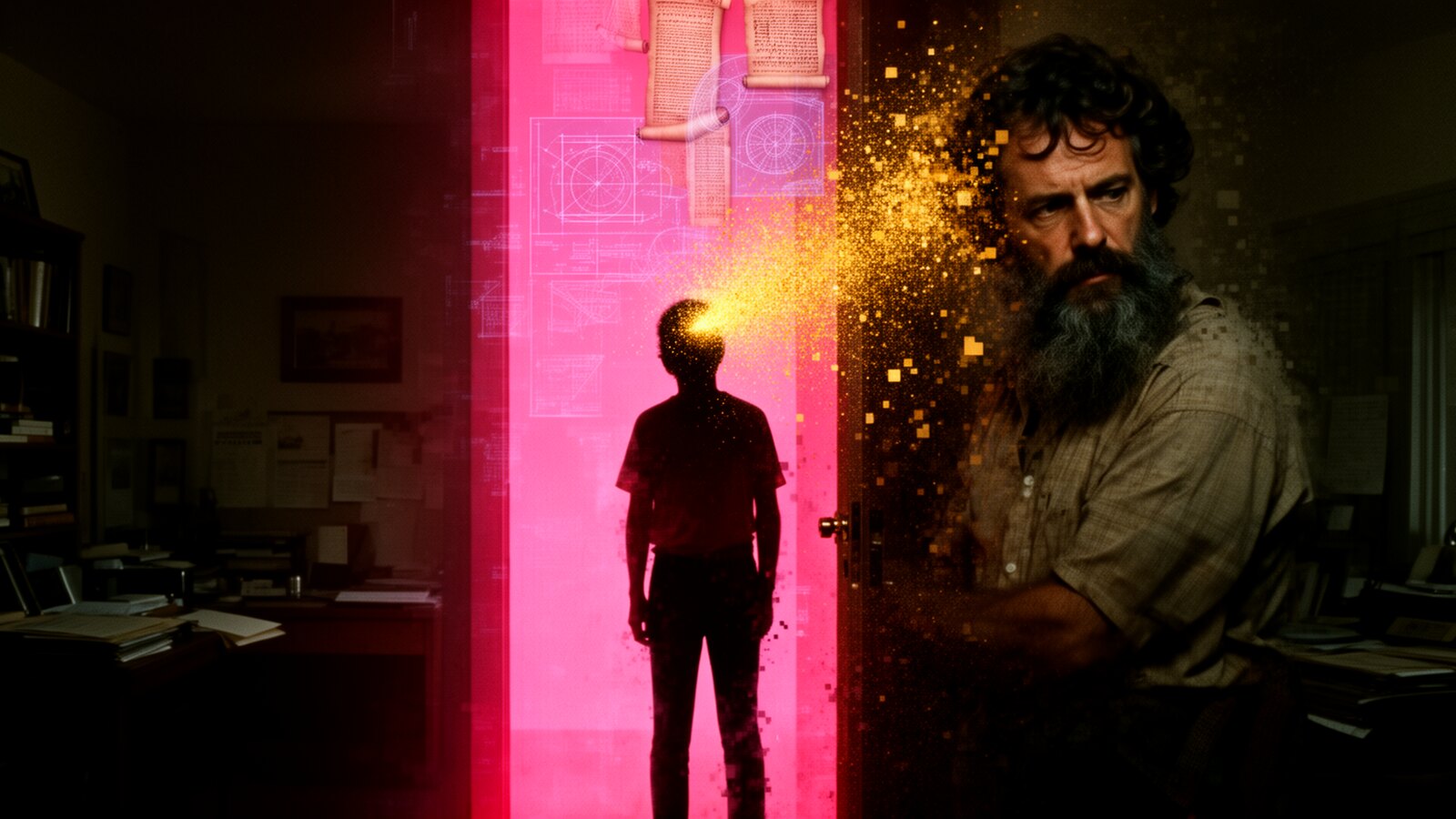
After: The delivery at the door image for the glitch that broke philip k dicks mind

What the vision actually said

The vision had content. This is the part that resists every easy frame.

In the months and years after, returning to the moment again and again in the private notebook he came to call the Exegesis, Dick did not describe a feeling, or a presence, or a wash of unstructured awe. He described an information transfer. "I experienced an invasion of my mind by a transcendently rational mind," he wrote, "as if I had been insane all my life and suddenly I had become sane." The phrasing matters. Not insight. Not contact. Invasion, by something he experienced as more reasonable than himself.

What the rational mind told him was specific and anatomical. In his own account, the intelligence "was firing information" at him, and the information concerned his son. Christopher, the intelligence said, had an undiagnosed right inguinal hernia. The hernia had burst. It had dropped into the scrotal sac.

That is the level of detail Dick set down. Side, structure, mechanism, location. Not a worry, not a prompting. A diagnosis, delivered in the register of a clinician, addressed to a father who had no medical training and who had been, ten minutes earlier, walking back from the door with a bag of painkillers for his own jaw.

The download did not stop at the medical line. Over the following weeks, more arrived: ancient languages he claimed he could not read but could now suddenly recognise, fragments of a Roman world overlaid on Southern California, an ongoing certainty that something rational and external was using his attention as a channel. But the medical sentence was the one that demanded action inside the next hour.

After: What the vision actually said image for the glitch that broke philip k dicks mind

The ten minutes before the doctor

This is the interval the camera cannot enter. It is the hardest place in the story to sit.

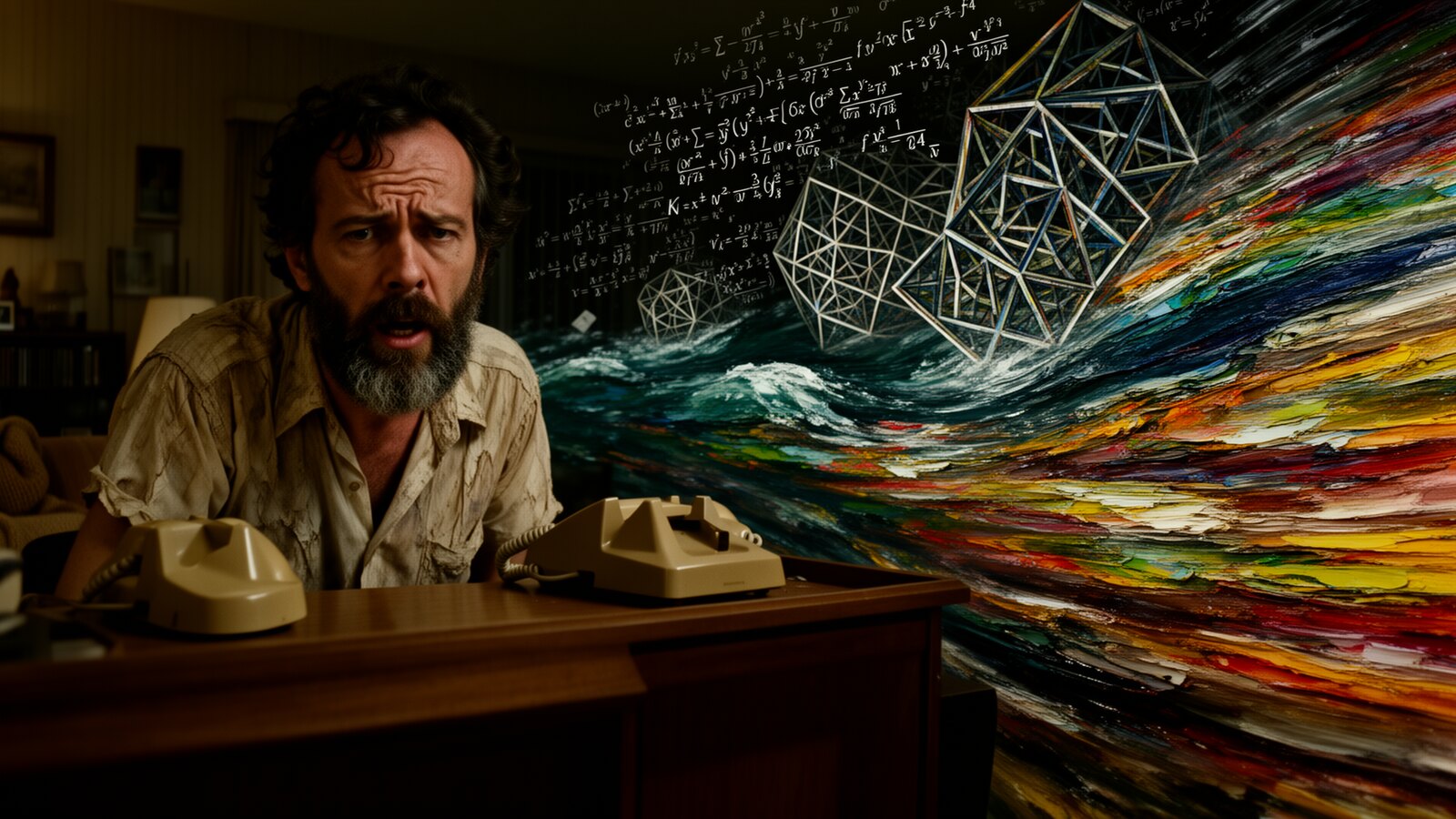
Imagine the kitchen telephone. A man with the inside of his mouth still numb is about to dial his paediatrician and describe, in the calm register the receptionist will require, a condition he has not observed in his child. He has not undressed Christopher to look. There is, in the ordinary sense, nothing to report. There is only what the pink light said to him.

He has to choose a sentence. I think my son has a hernia is a sentence a parent is allowed. I had a vision and a rational mind told me my son has a right inguinal hernia that has burst and dropped into the scrotal sac is not a sentence the receptionist is trained to receive. The first sentence is a lie of compression. The second sentence ends the call and possibly opens a different one, to a different kind of doctor, about him.

So he compresses. He acts on the vision while still being inside the vision. He chooses the words that will get the appointment, holding privately the source he cannot share. The decision is the small, unglamorous shape of the whole 2-3-74 episode in miniature: a man behaving as if the message is real because the cost of treating it as unreal is a child.

He hangs up. The appointment is made. Christopher is asleep. The pharmacy bag is still on the table where he set it down. The apartment is quiet in the way that apartments are quiet when a parent has just done something on faith and is now waiting to find out whether the faith was justified or whether he has just begun a slow walk toward a different diagnosis, of himself.

After: The ten minutes before the doctor image for the glitch that broke philip k dicks mind

What the examining doctor found

The doctor's examination confirmed the exact defect the vision had described.

That sentence, written flat, is the load-bearing fact of the episode. Christopher was taken in. The paediatrician examined him. There was a right inguinal hernia. It had, as the intelligence had said, descended. The child was admitted for emergency surgery, the kind of intervention that, untreated, runs along a short and ugly timeline.

Tessa Dick, in interviews given long after, described the sequence in a register notably free of mysticism. She took the baby in. The doctor found what her husband had said the doctor would find. The surgery was done. Christopher came home.

This is the place in the story where any neat reading splits. A purely psychiatric account has to absorb the fact that the hallucinatory medium delivered a specific, verifiable, and time-critical instruction. A purely metaphysical account has to absorb the fact that Dick, like many people, had had hallucinatory experiences before that did not save anyone, that produced no child, no diagnosis, no surgical confirmation. The episode does neither side the favour of falling cleanly into its preferred shape.

It is also worth saying, quietly, because the texture matters, that the context was not a recreational one. The chemistry in his bloodstream that afternoon was sodium pentothal residue and an ordinary post-extraction analgesic. The pink beam arrived through a window of dental recovery, not a window of self-administered psychedelia. The easy reading is not available.

What is available is this: a child went to sleep in a hallway, woke in a hospital, came home in a small bandage, and grew up. The defect was real. The instruction had been right. The means of delivery remained, and remains, unclassified.

After: What the examining doctor found image for the glitch that broke philip k dicks mind

Living next to an unfalsifiable rescue

For the next eight years, until his death in 1982, Dick wrote. He wrote in the mornings and the small hours. He filled what eventually amounted to several thousand pages of a private, handwritten, often single-spaced notebook, returning to the same minutes in February 1974 from every possible angle of approach. He called it the Exegesis.

The temptation is to read this output as cosmology. As a writer's late metaphysics, an attempt to assemble a system. It can be read another way, lower to the ground.

It can be read as the work of a man trying to live next to something that worked. Not something that comforted him. Something that worked. A vision had given him an action; the action had saved a child; the source of the vision had given no return address. The Exegesis is not, in this reading, a search for a god. It is the thinking a person does when they have been handed a piece of evidence that will not fit any of the available drawers. Religious experience accepts the source and stops asking. Pathology rejects the content and stops asking. Dick could do neither, because the source was opaque and the content had been correct.

The cosmologies in the notebook, the holographic universe, the Roman empire still secretly running, the rational mind he sometimes called VALIS, are scaffolding around an unbearable middle. The middle is the appointment. The middle is the doctor's hand finding what the pink light had said would be found. The middle is the impossibility of being grateful to nothing in particular. The Exegesis is what gratitude looks like when it has nowhere to send the letter.

This is the part of the story that does not travel into the film versions of his life, into the cosmological survey, into the question of whether VALIS was real. The story traveling there is a different story. The story here is smaller and worse: a parent, after the rescue, with no one to thank and no one to blame, reaching for a pen.

After: Living next to an unfalsifiable rescue image for the glitch that broke philip k dicks mind

Christopher, asleep

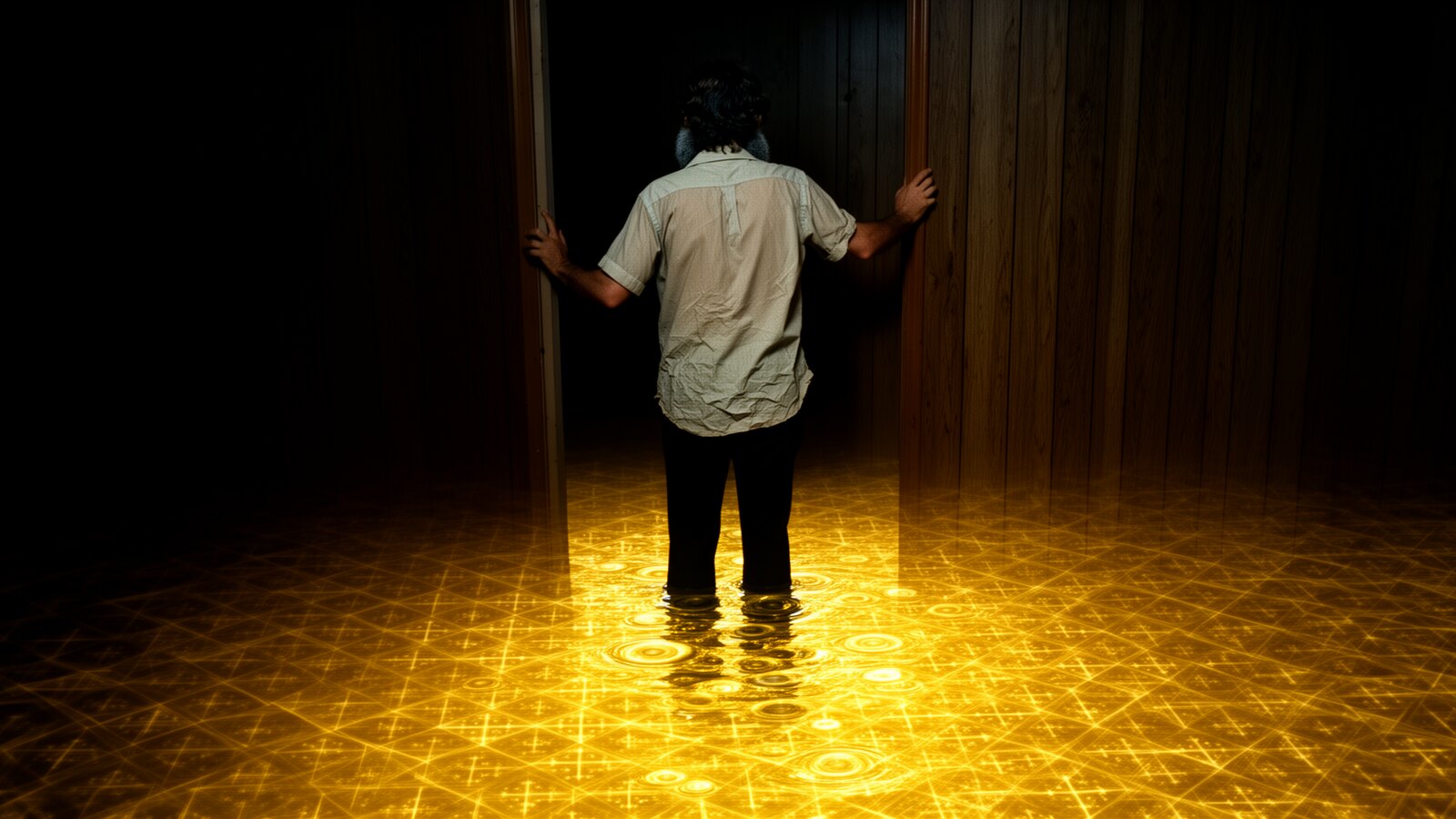
Hold the doorway again. The pharmacy bag is on the hall table. The dental anaesthetic is wearing off, slowly, in the way it does, the jaw beginning to register itself again, the body beginning to come back to the body. The chain is no longer at the door; the delivery woman has driven on to the next house. The pink light is gone. The apartment is doing the small noises that apartments do in late winter, the heater, the window catching wind.

Down the hall, Christopher is asleep.

He is asleep in the present tense of that afternoon, before the appointment, before the examining table, before the small bright surgical room and the recovery and the homecoming. He is asleep in the only state his father can verify by walking ten paces and looking. His breath is even. His chest is rising. There is no apparent emergency in the room. The emergency is interior, anatomical, undisclosed except by a beam of light that has already left.

His father stands at the doorway of the hall and does not yet have words for what just happened. He will spend years arriving at words and discarding them. Tonight he will not write anything in the Exegesis, because the Exegesis does not exist yet. Tonight he will phone the doctor, and tomorrow the doctor will examine the child, and the day after that the surgeon will find precisely the defect the rational mind had named.

The infant breathes through the night. The father stands at the doorway holding a paper bag of pain medication. Neither of them yet knows what to call what just happened, and neither of them, in any honest accounting, ever will.

After: Christopher, asleep image for the glitch that broke philip k dicks mind
It was firing information at me... It told me that my infant son had an undiagnosed right inguinal hernia that had burst and dropped down into the scrotal sac.
— Philip K. Dick, Interviews / The Exegesis of Philip K. Dick