Kabbalah
Kabbalah
Posted 29 april 2026

What Carl Jung Saw When He Died

A blood clot, a vision of Earth, and seventeen years of aftermath

Posted 29 april 2026
Watch on YouTube

The Fall on the Ice

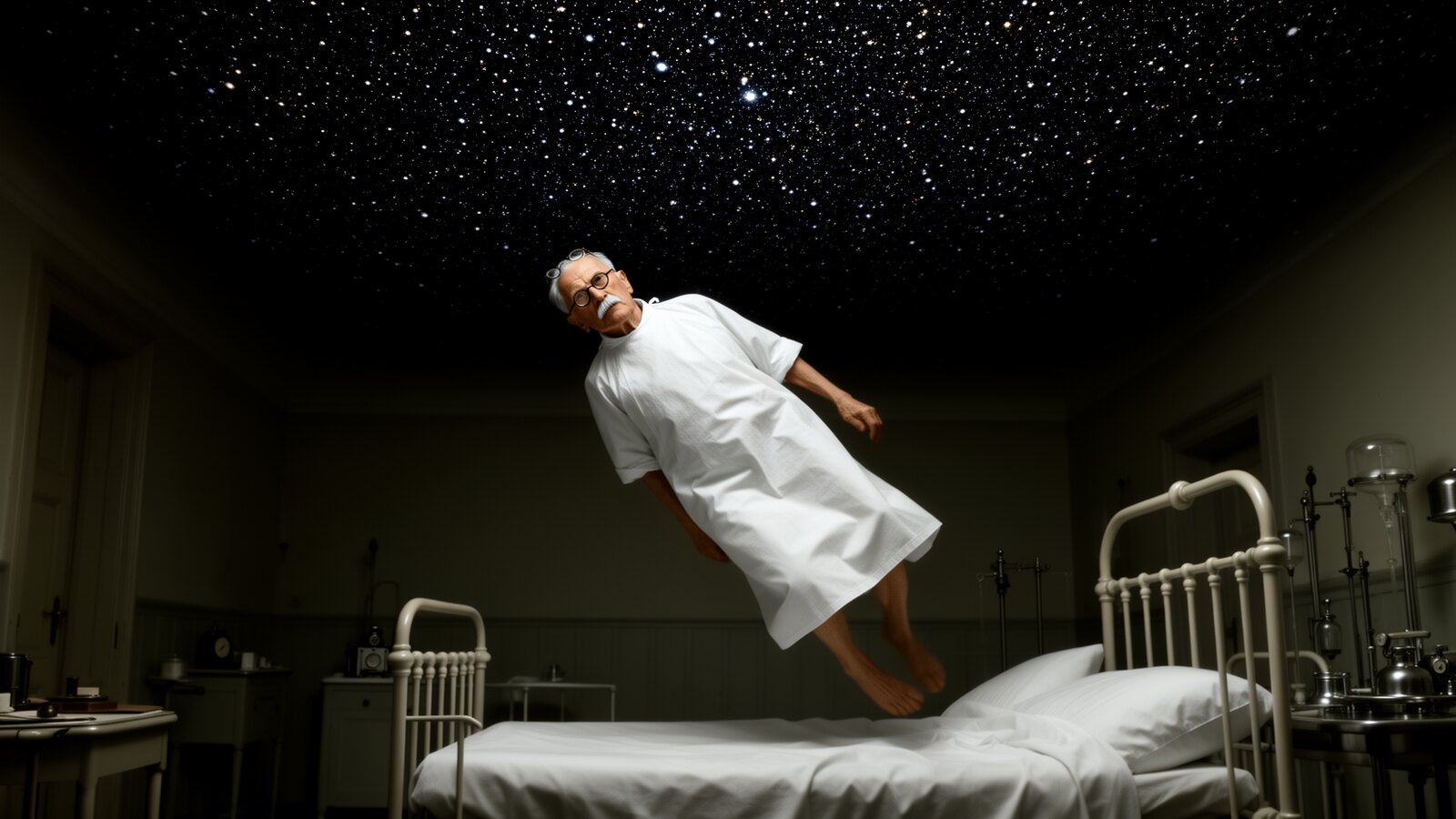
In February 1944, Carl Jung slipped on ice near his home in Küsnacht and broke his leg. A hospital admission could have made it a small domestic accident, painful but ordinary. Instead, while recovering in Zurich, a blood clot moved through him and the case became something else: fever, embolism, collapse, the body trying to leave its own room.

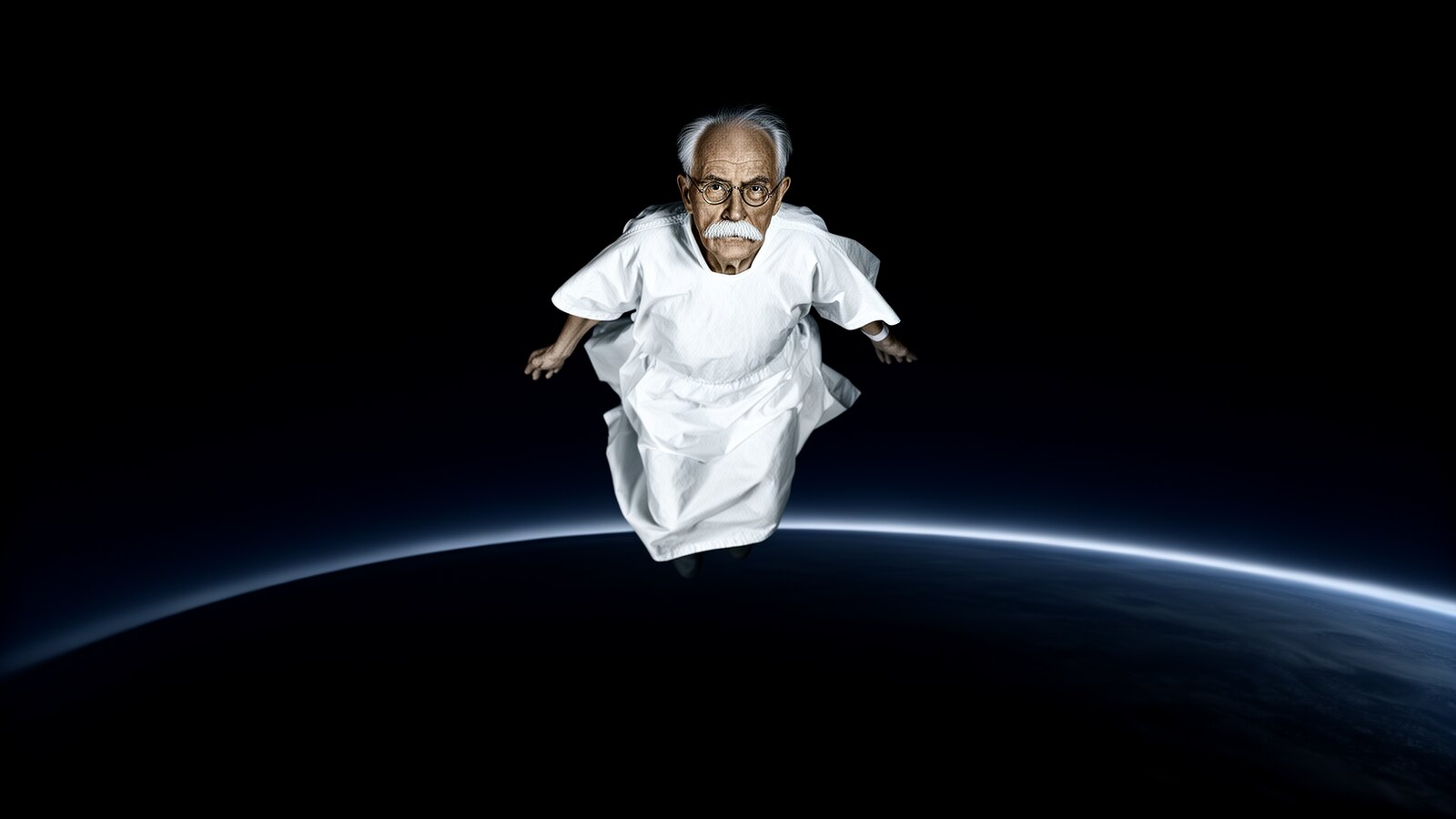
Seventeen years before any human reached orbit, Jung would later describe looking down at Earth from space. No rocket carried him there; in the account he left, consciousness had lifted away from a bed in Switzerland and found the planet below him: blue ocean, silver land, cloud over the Himalayas.

Around the bed, ordinary medicine kept its own records. Nurses watched his temperature, pulse, and breathing. One report attached to the episode says they saw a faint luminous halo around him, a glow they associated with patients who did not come back. Sweat, fever, chart, lamp, corridor: everything clinical was still there. Then, in Jung's telling, the ceiling opened.
After: The Fall on the Ice image for what carl jung saw when he died

Above the Earth

Height came first: Zurich, Switzerland, Europe, all of it dropped below the scale of personal life. From roughly a thousand miles up, Jung saw the curve of ocean, silvery continents under cloud, the Himalayas dark against the atmosphere, and Ceylon near the sea.

No one in 1944 had seen that view with human eyes. Public images of the whole Earth would come decades later, when Apollo and Blue Marble gave the twentieth century its planetary icon. Jung's description does not prove a literal voyage, but it makes the testimony harder to flatten. A man in cardiac danger, before the space age, remembered the planet as if distance had finally made it visible.

At the edge of that view hung a dark stone block, like a temple suspended in the void. Toward it, Jung moved with a strange certainty. Approaching the entrance stripped him of biography. Projects, griefs, arguments, name, and status lost their grip. What remained was not achievement or failure but the bare fact of being summoned.

After: Above the Earth image for what carl jung saw when he died

The Garden of Pomegranates

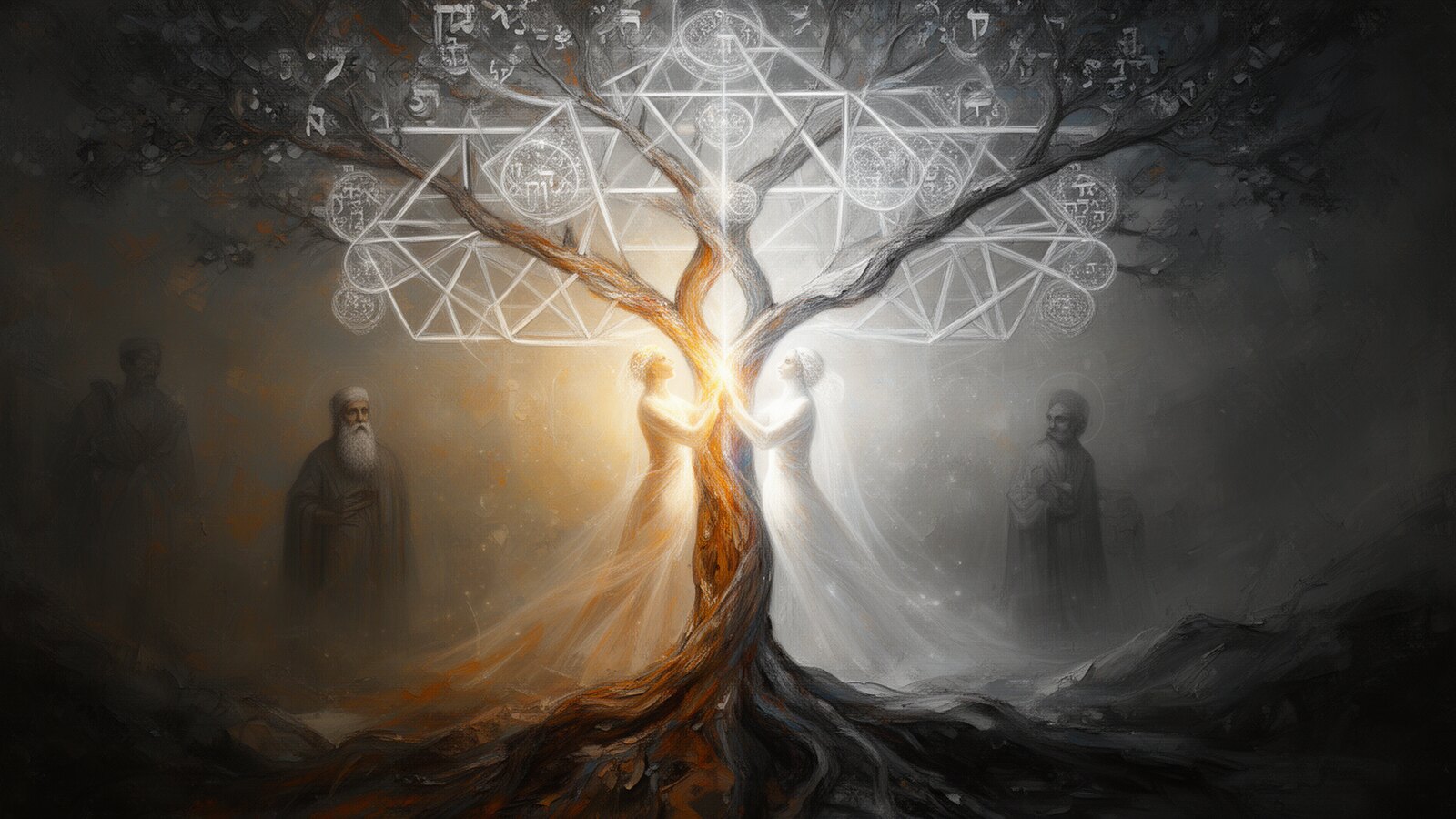
Beyond the stone, the scene changed again. Jung entered a place he later named Pardes Rimmonim, the Garden of Pomegranates. Before it belonged to his vision, the phrase belonged to Kabbalah: Moses Cordovero's sixteenth-century work from Safed, a vast attempt to map divine emanation through the sefirot.

By 1944, such imagery was not foreign terrain for him. Alchemical and Kabbalistic texts had fed his work on the conjunction of opposites for decades. Death, or the mind under death's pressure, did not hand him random scenery. It gave him architecture built from the deepest books in his library.

At the center of the garden, a wedding unfolded. Tifereth and Malkuth, bridegroom and bride, David and Bathsheba: figures from Jewish mysticism and alchemy arranged themselves as a union of opposites. Jung did not remain a spectator. "At bottom it was I myself," he wrote. "I was the marriage."

That sentence is the hinge. Symbols were no longer appearing before him. Subject and object had collapsed into one event. What he had studied as pattern became a state he occupied. For a psychologist who spent his life arguing that images are facts of the psyche, the garden arrived as proof of a different order: not a theory, but an ordeal.

Scholars can read this as memory, hyperphantasia, cryptomnesia, symbolic compensation, or religious experience. Each frame catches part of the scene. None exhausts it. Jung carried the archive into the crisis, and the crisis returned the archive as a world.

After: The Garden of Pomegranates image for what carl jung saw when he died

The Doctor's Exchange

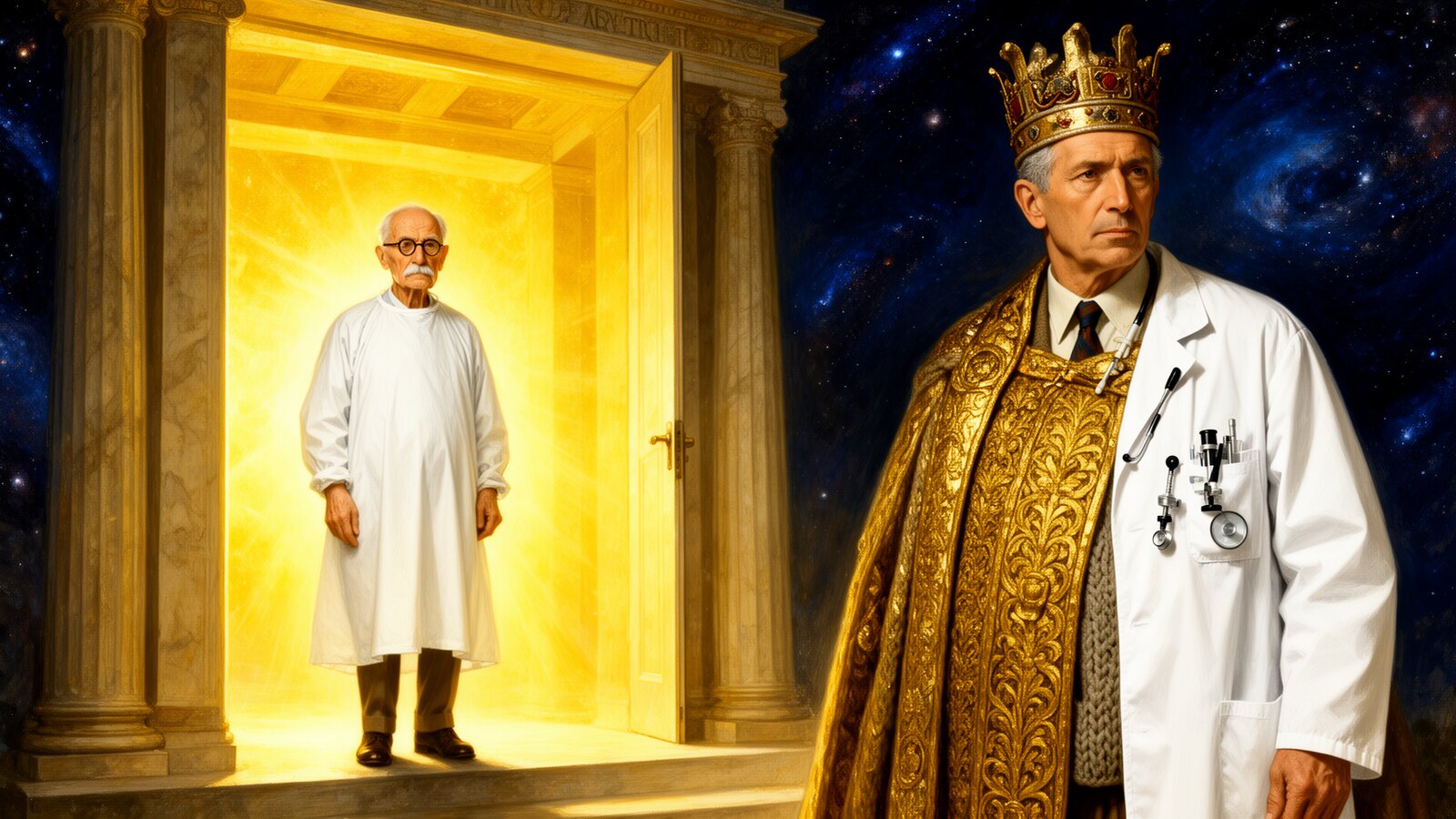
Near the bed, physician H. entered the story. During the worst of Jung's illness, the doctor came to examine him. Jung later remembered seeing the man framed in gold, no longer only a clinician but a ceremonial figure, as though the physician had stepped into the same borderland.

At first, Jung said nothing while his own condition began to turn upward. The doctor, meanwhile, fell ill and died soon after.

Handled carelessly, this becomes cheap occult exchange. Jung's account is more unsettling because it refuses to settle. He places the vision and the death next to each other without proving a mechanism. Premonition remains possible inside the story. So does retrospective pattern-making, the mind's tendency to bind two charged moments once the second has happened.

Either way, the physician's visit changes the emotional temperature. The drama is no longer only Jung's private ascent. Someone from the hospital world appears inside the visionary field, and afterward the living patient and the doctor seem to trade positions: one returning to the ward, the other moving out of reach.

After: The Doctor's Exchange image for what carl jung saw when he died

What He Brought Back

Coming back hurt more than leaving. As the visions receded, ordinary life did not feel like rescue. Jung had touched a state where division seemed healed, then woke into a world where every union had to be earned again.

For weeks, recovery carried the taste of exile. Food seemed coarse; daylight felt grey. The body that survived was also the body that trapped him. To live meant returning to limitation, to paper, correspondence, old conflicts, unfinished books, and the slow work of translating a vision back into language.

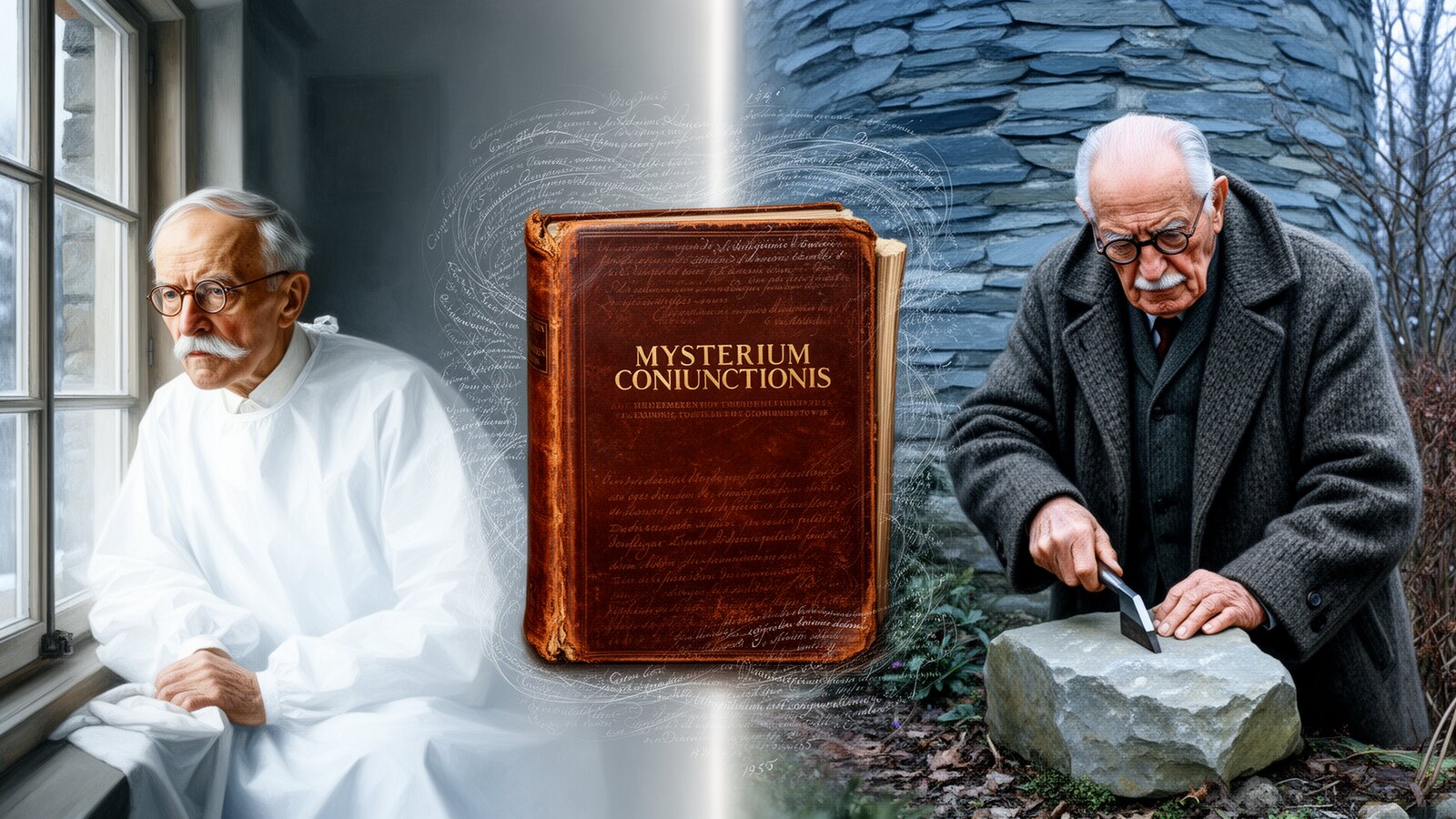
Seventeen years remained. During that late period, Jung published Aion and Mysterium Coniunctionis, works saturated with the self, the conjunction of opposites, and the alchemical problem of union. Causality would be too neat. The books did not simply spill out of the hospital bed. Still, after the 1944 testimony, those late works look less like abstract scholarship and more like an attempt to give the garden a library.

His account never offers a comfortable ending. No doctrine seals the event, no proof arrives, and no clean answer explains whether the vision came from a dying brain, a symbolic unconscious, or a threshold that psychology can name only from one side.

What remains is a man sent back from a place he did not want to leave. Years later, in a Swiss garden, Jung walks on a leg that never fully forgets the fall. The hospital is nearby. The book waits on the desk. Somewhere beyond the reach of ordinary seeing, the stone block, the blue Earth, and the wedding continue as unfinished instructions.

After: What He Brought Back image for what carl jung saw when he died
Everything around me seemed enchanted. I would never have imagined that any such experience was possible.
— C. G. Jung, Memories, Dreams, Reflections