Christian Mysticism
Christian Mysticism
Posted 6 may 2026

William Blake Lived Inside a Vision for 70 Years

What it costs to keep seeing what a child sees

Posted 6 may 2026
Watch on YouTube

The Wife in the Next Room

A visitor once asked Catherine Blake where her husband was. "Mr. Blake is very seldom in Paradise," she said.

Peckham Rye sits in south London. Around 1765, William Blake, eight years old, walked home and told his mother he had seen a tree filled with angels, their bright wings bespangling every bough like stars. His father moved to thrash him for lying. Catherine intervened. Blake kept the account unchanged into adulthood, and his visions, by his own testimony, never stopped arriving.

That sentence about Paradise is the most domestic line in the archive of visionary experience. It carries no theology, no defence, no awe. A wife describes her husband's whereabouts. Those whereabouts happen to be Paradise. She has lived with this for forty-five years, beside ink pots, copper plates, and a small coal fire.

Most testimony about mystics arrives filtered through monks, hagiographers, later editors. Catherine's line arrives through a doorway, mid-task, with the fire still going. It comes nearer than any other record to the texture of continuous vision inside a working household: a small flat in Lambeth or Fountain Court, two rooms, two people, one of whom is in two places at once, and the other knowing it well enough to joke.

Hold the line a moment.

Most of what we know about Blake's seventy years of unbroken sight comes through evidence like this. Not ecstatic outbursts. Domestic asides. A wife's affectionate complaint. A diarist's note about tone of voice. A letter to a friend, slipped between sentences about a job.
After: The Wife in the Next Room image for william blake lived inside a vision for 70 years

The Tone That Gives It Away

Robinson sat with Blake several times in the painter's last year and wrote down what he heard. A lawyer and diarist, Henry Crabb Robinson kept careful notes in a steady hand. The sentence that lasts is not about the content of the visions. It concerns the manner.

Blake spoke of his visions, Robinson recorded, in "the ordinary unemphatic tone in which we speak of trivial matters that every one understands and cares nothing about." Read that twice. Trivial matters. Everyone understands. Nobody cares. A man uses this register to mention the weather, or a small bill, or the postman at the door.

Picture, briefly, sitting opposite Blake at a wooden table. He tells you the prophet Isaiah dined with him last Thursday. He does not raise his voice. He does not perform. He does not invite you to be amazed.

Robinson notes that the ordinariness of the tone is itself the strange thing.

The miracle, if there is one, has migrated from the content of the words to the delivery of the words. A small diagnostic falls out of this for the reader. Tone reveals what we believe is real. We get loud about what we secretly suspect might be doubted. The unemphatic voice belongs to the settled. Blake's visions were settled. Ours, about most of what we claim to value, are not.

After: The Tone That Gives It Away image for william blake lived inside a vision for 70 years

A Tree on Peckham Rye

Blake's first recorded vision is older than memory ought to be. He was four. He saw the face of God pressed against a window and screamed. The story comes through his early biographer Alexander Gilchrist; the screaming child is the detail that survives. Whatever stood at the glass, the child knew it as a face.

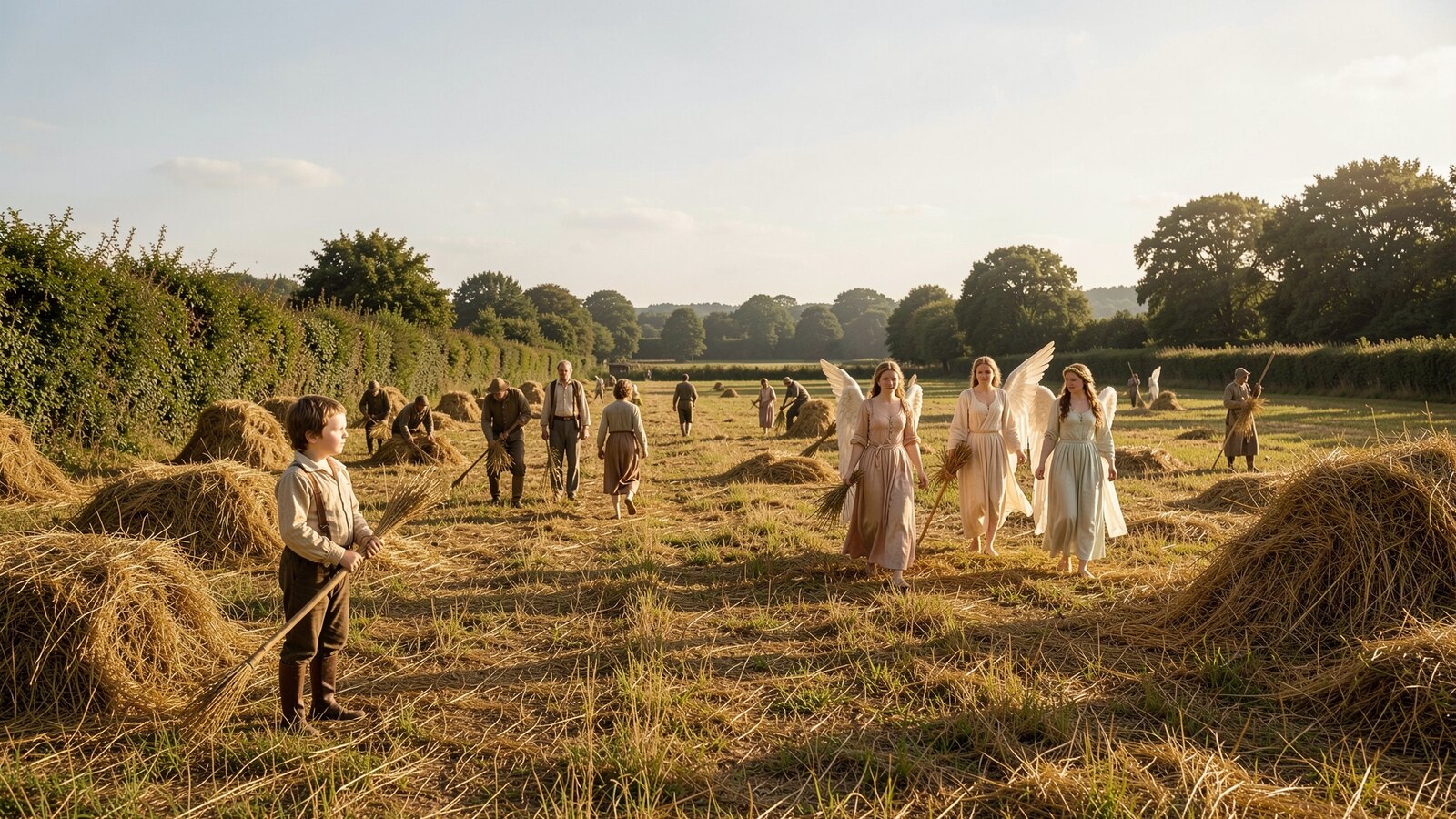
Four years later, on Peckham Rye, the boy looked up at a tree and saw its branches filled with angels, bright wings bespangling every bough like stars. He walked home and reported it. His father raised a hand to beat him for lying. His mother stepped between the strap and the child.

Another day, in a field, Blake saw the prophet Ezekiel sitting beneath a tree.

This is the entry image, and it is also a small instruction in how childhood ends for most people. The boy reports what he sees. The father, defending the household against falsehood, reaches for the strap. The mother, defending the child, blocks the blow. Three responses to a single perception, each one most of us recognise from our own training. Punishment, protection, and the dawning understanding that the safer move is to stop reporting.

Blake never adopted the safer move.

The angels are not the unusual part. Plenty of children see things. He kept saying what he saw, in the unemphatic tone, for the next sixty-six years.

After: A Tree on Peckham Rye image for william blake lived inside a vision for 70 years

The Brother Who Kept Speaking

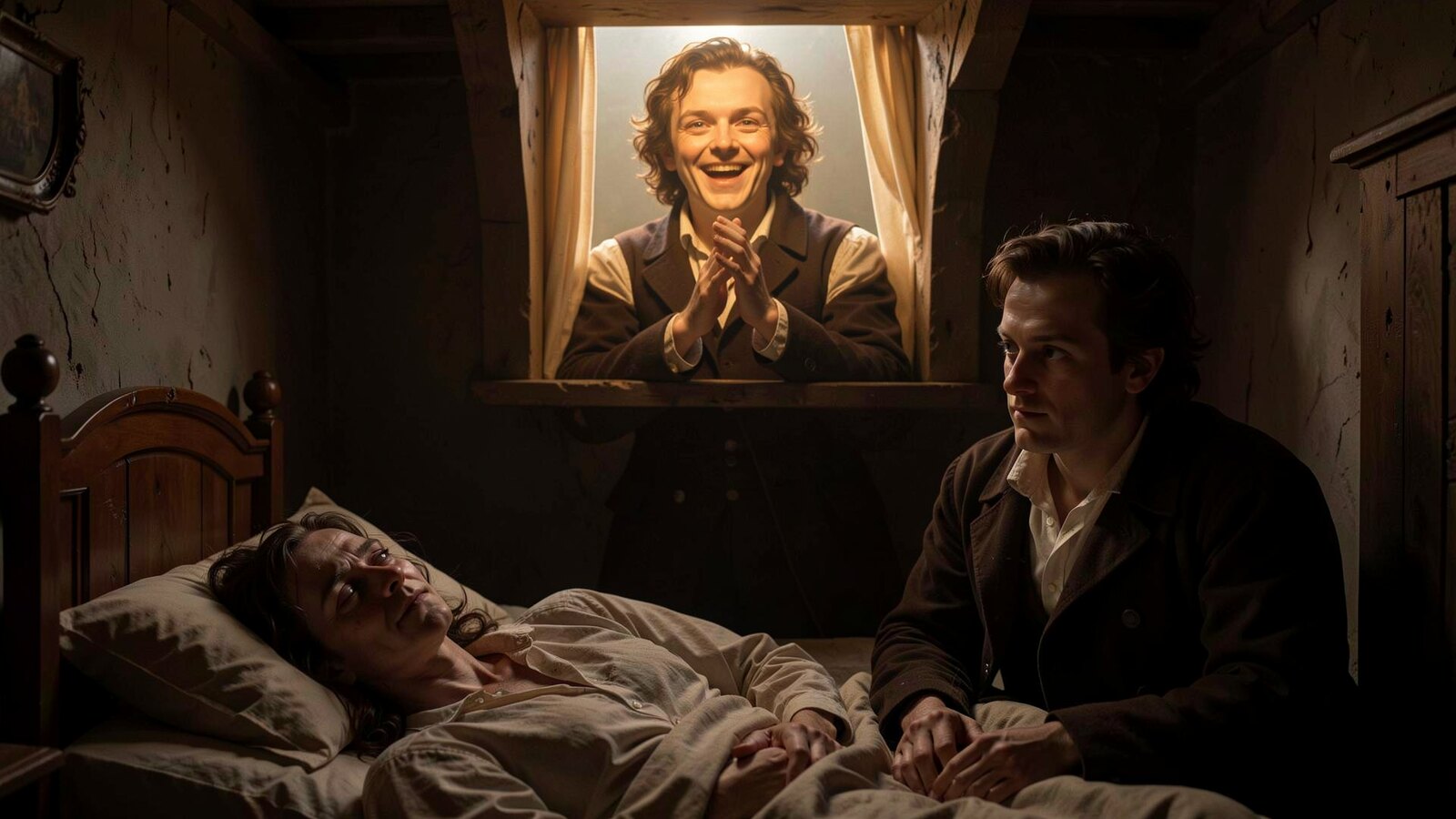
Robert Blake lay dying in February 1787 in the small house on Broad Street. William sat with him through the last days, sleepless. At the moment of death, by Blake's later account, Robert's spirit rose through the ceiling, clapping its hands for joy. William then slept for three days.

Hold the clapping, not the ceiling.

A small, embodied gesture, kept across the membrane.

Blake wrote to his patron William Hayley in 1800. Hayley had recently buried a son. The letter is a condolence, and it does the strange thing condolence letters sometimes do, offering a piece of the writer's own life by way of company. "Thirteen years ago I lost a brother," Blake wrote, "and with his spirit I converse daily and hourly in the Spirit, and See him in my remembrance in the regions of my Imagination. I hear his advice and even now write from his Dictate."

Notice the register. He is not consoling Hayley with theology. He is reporting practice. Robert is still in the workshop. Robert is still suggesting things. Some suggestions, Blake said elsewhere, were technical. The relief etching method that let him print his illuminated books, with drawing and word fused on the same copper plate, came to him from Robert in a dream. The most distinctive printing technique in English visionary art was filed, in Blake's mind, under advice from Robert.

A reader can do many things with this evidence. The evidence will not let a reader treat the brother's continued presence in Blake's working life as a sealed event. It is not an episode. It is a thirteen-year working partnership, written down inside a letter about a different grief.

After: The Brother Who Kept Speaking image for william blake lived inside a vision for 70 years

What Single Vision Costs You

In a verse letter to his friend Thomas Butts, Blake folded a small prayer. "May God us keep," he wrote, "from Single vision and Newton's sleep."

Single vision is the perception contracted to the five senses: the world as Newton's diagrams describe it, matter, force, measurement, the eye as a lens. Blake did not deny the diagrams. He denied that the diagrams were the whole.

Translate the prayer downward, into a Tuesday. You wake. You reach for the phone before you reach for the window. The first images of the day are advertisements for objects, shaped by an algorithm that has measured your attention. On the train, a hundred faces are angled into the same lit rectangles. In the grocery aisle, the apples have been arranged by yield per square foot. The sky over the carpark, if you remember to look at it, is a colour you do not have a word for, and you do not look at it.

This is single vision as a working condition. Not stupidity. Not even unhappiness. A trained narrowness of intake, optimised for function, in which the bough does not bespangle and the tree is a tree is a tree.

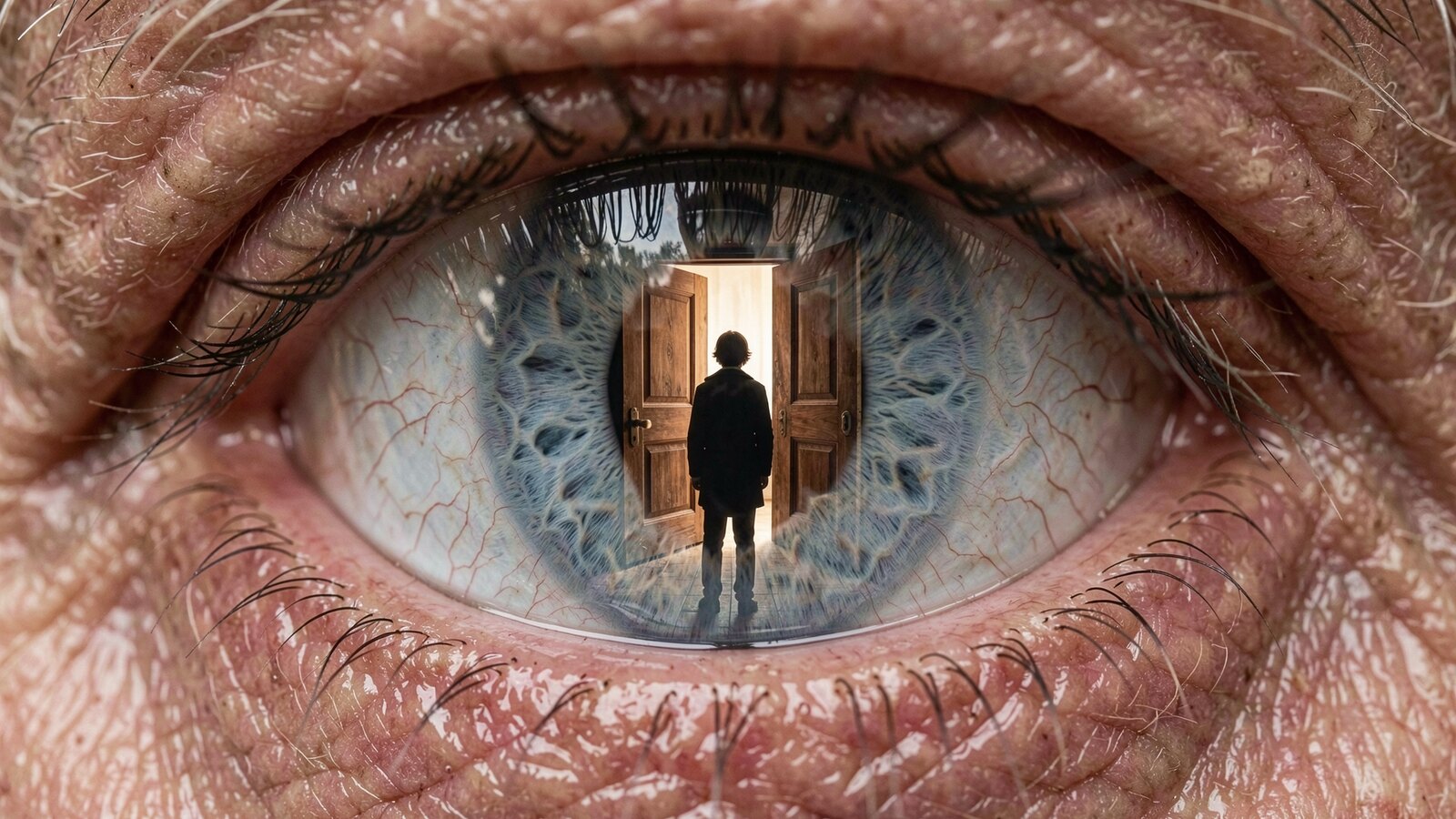
Blake's claim, repeated in different forms across forty years, was that this narrowness is contingent. It can be widened. "If the doors of perception were cleansed," he wrote in The Marriage of Heaven and Hell, "every thing would appear to man as it is, infinite. For man has closed himself up, till he sees all things thro' narrow chinks of his cavern."

The cost of single vision, on this account, is not failure to see angels. It is failure to see apples. The infinite, in Blake's grammar, is not a separate realm. It is what is here, when the chink widens.

After: What Single Vision Costs You image for william blake lived inside a vision for 70 years

Reading One Plate

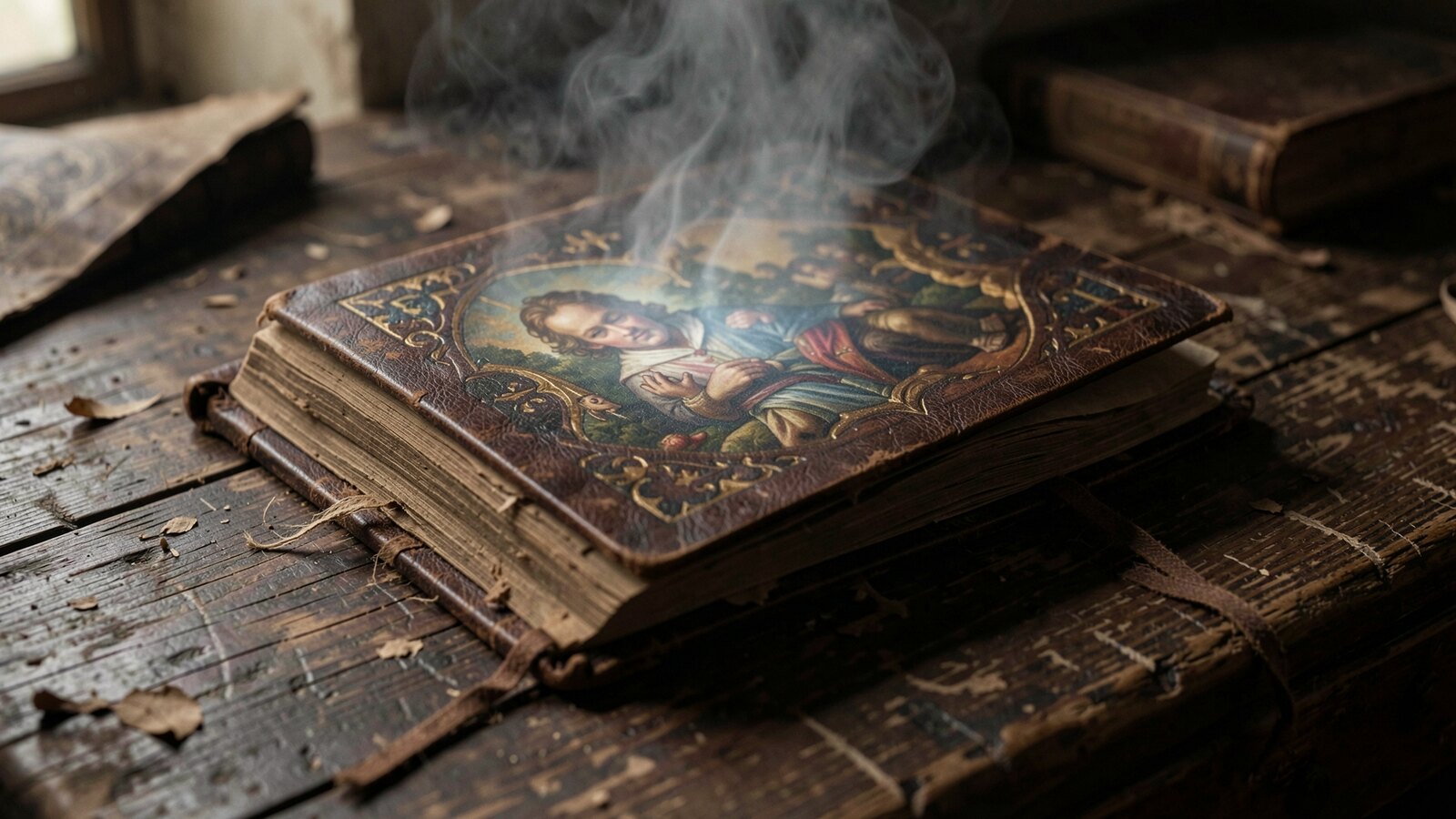
Set a single page of the illuminated books on the desk under raking light and the labour of seeing becomes visible. The words are not printed on top of an image. The image is not pasted around the words. They emerged together, drawn directly onto a copper plate in an acid-resistant varnish, then bitten by acid until letter and figure stood up in relief together. Blake printed the plate in coloured inks, Catherine often inked the press, and the result was washed by hand with watercolour, no two copies the same.

Look at one. Take a plate from Songs of Innocence. A small child, a lamb, a tree whose branches climb the margin and become initials, vine-like, animal-headed. The text is legible but not separate. Read a line and the eye is pulled up the trunk, into a curl, around a body, back to the next word. The page is meant to be seen and read at once, in a single motion, the way a child sees the tree on Peckham Rye.

This is fourfold sight on copper. The technical method and the perceptual claim are the same gesture. Blake's argument about perception was that word and image, fact and figure, body and meaning, are not separable layers. The plate refuses to separate them. The reader who tries to lift the text out of the picture finds the text shrinking; tries to lift the picture out of the text, and the picture goes flat. Held together, both open.

The illuminated books were laborious, slow, expensive in time, sold in tiny editions to a handful of buyers, often to no buyers at all. Blake worked on them anyway, for decades. Looking at a single page now, in a museum case, is the closest a reader gets to standing inside the working condition of continuous vision. Someone made this, calmly, as a Tuesday matter, while the brother spoke from the next room.

After: Reading One Plate image for william blake lived inside a vision for 70 years

Other Names in the Archive

The archive of visionary experience contains many names. Hildegard of Bingen wrote down her visions in the twelfth century with a careful note that they came as "the living light," episodic, often arriving with migraines. Jakob Boehme, the cobbler of Görlitz, dated the central illumination of his life to a single quarter-hour in 1600, when sunlight on a pewter dish opened the structure of all things to him; he spent the rest of his life writing it down. Emanuel Swedenborg, whom Blake read closely and quarrelled with, kept a dream diary of the years his sight opened, and treated heaven as a place he visited.

Set Blake against these and a small distinction sharpens. Hildegard, Boehme, Swedenborg each had a before and an after, a moment the sight arrived, a practice of returning to it. Blake had no such moment. The four-year-old at the window is already inside it. The eight-year-old on the rye is already inside it. The seventy-year-old on the deathbed, bursting into songs about the things he saw in Heaven, is still inside it. The state did not arrive. It did not, in the surviving record, leave.

Whether his family beyond his mother ever made peace with this is not preserved clearly. The archive does not say. What the archive does say, in Catherine's line and Robinson's note and the letter to Hayley and the copper plates and the deathbed song, is that one human being, for almost seventy years, looked through his eyes the way you look through a window, and reported what was on the other side in the tone you use to mention the weather.

The question the archive hands back is not whether to believe him. It is what your own tone, on the matters you claim to care about, reveals about what you have already trained yourself not to see.

After: Other Names in the Archive image for william blake lived inside a vision for 70 years
an Innumerable company of the Heavenly host crying Holy Holy Holy is the Lord God Almighty.
— William Blake, Dossier text