Zen
Zen
Posted 5 may 2026

Zen Buddhism: Why Your Search for Awakening is a Trap

An old cook, a midnight shout, and the morning after

Posted 5 may 2026
Watch on YouTube

The cook would not sit down

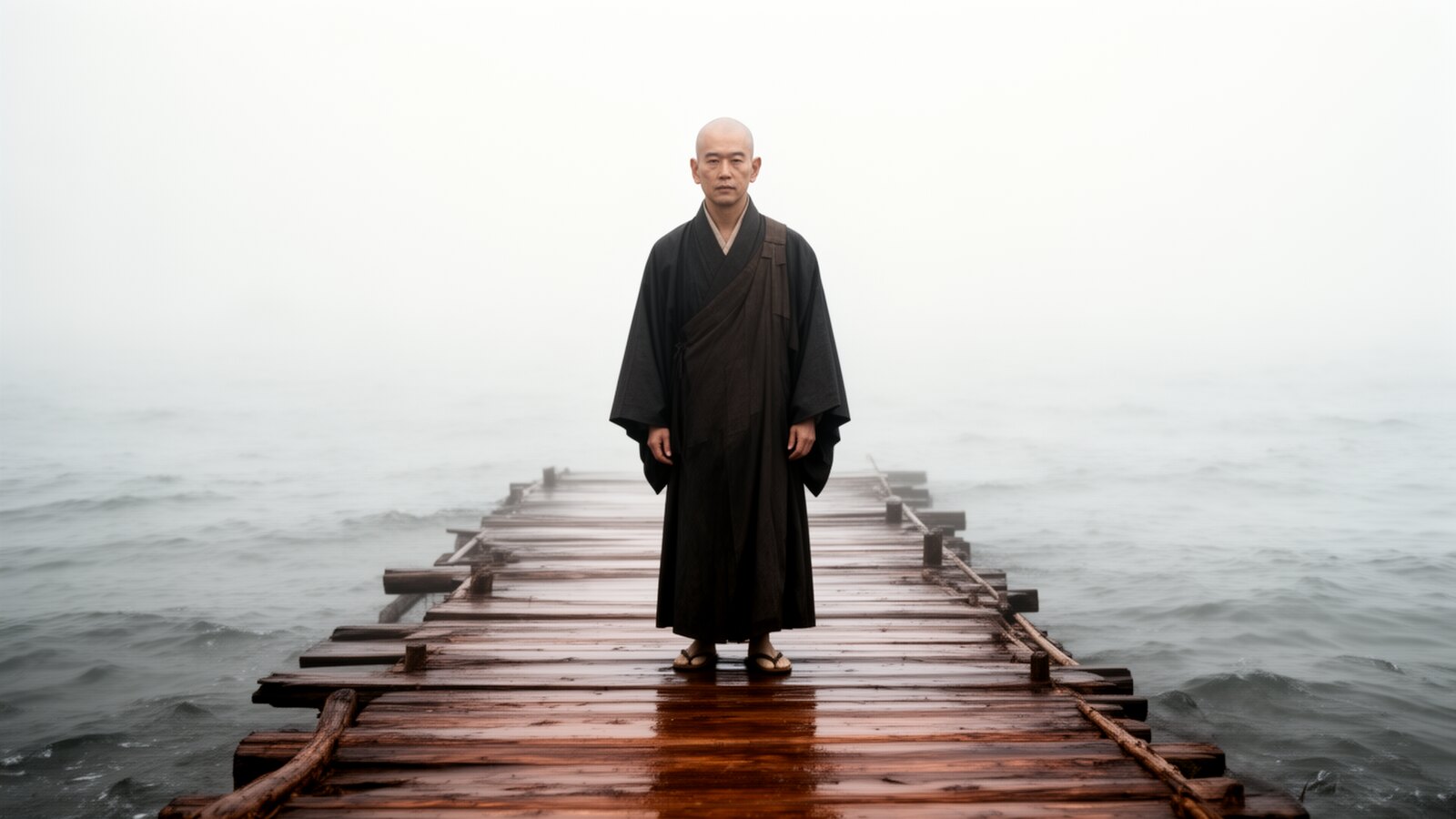
In the summer of 1225, in the monks' hall of Tiantong monastery in Song China, a Japanese pilgrim named Dōgen heard Abbot Rujing shout at a dozing monk: "Cast off body and mind." Dōgen walked to the abbot's quarters at twenty-five, four years into his search abroad. He lit incense, bowed, and reported the experience. Rujing refused to congratulate him. The master told Dōgen that the dropping off had itself dropped off.

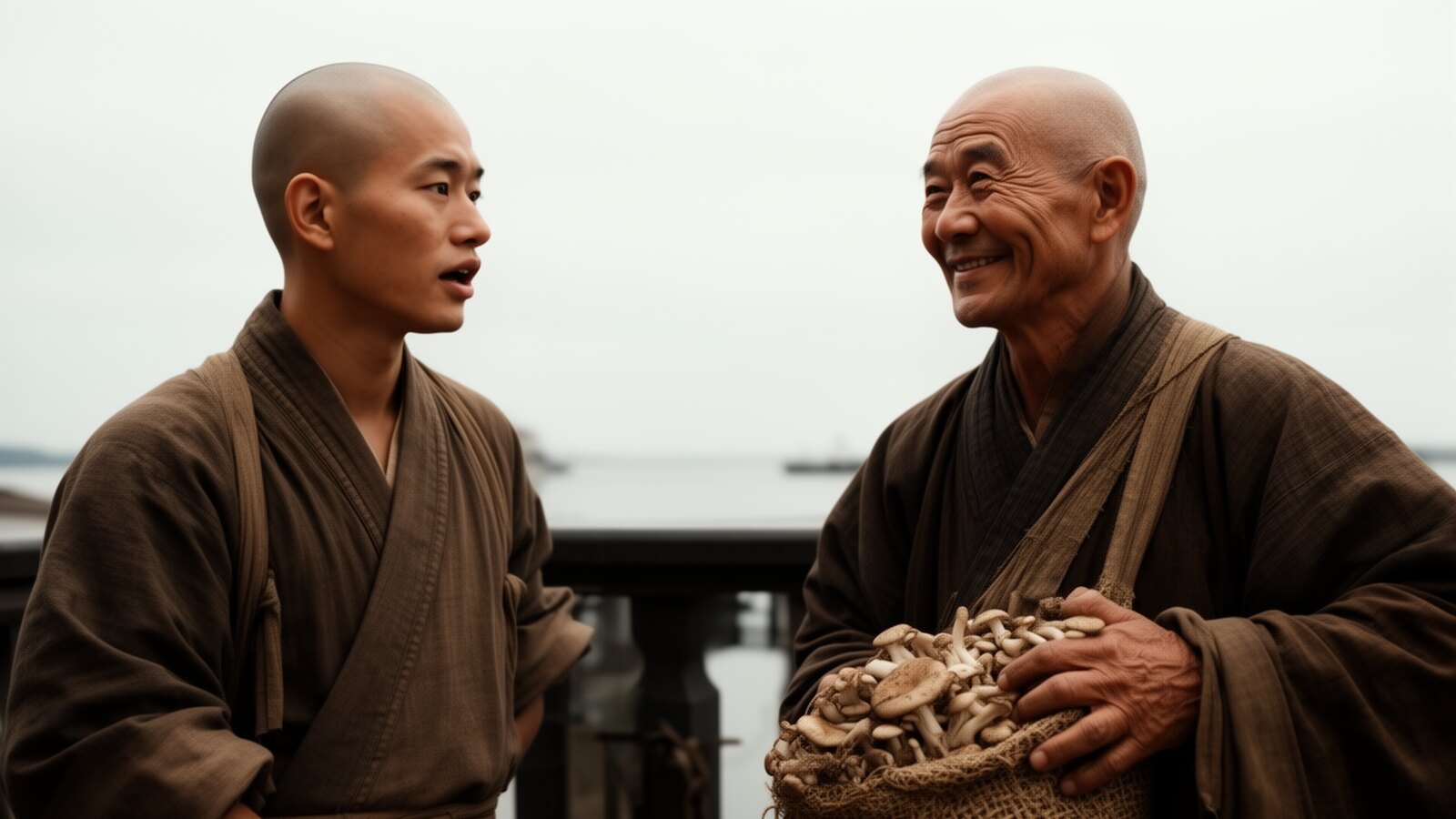
Two years before that shout, on a ship docked at the port of Ningbo, Dōgen had met an old cook from Mount Ayuwang come aboard to buy Japanese shiitake for the monks' soup. Dōgen, twenty-three years old and already brilliant in the texts, invited him to stay. Sit. Drink tea. Discuss the dharma. The cook only shook his head, hoisted the sack of mushrooms onto his shoulder, and pointed at the sun already past the masthead.

The cook laughed at him. Mushrooms were the practice. Soup for the monks tomorrow was the practice. Walking back in the heat was the practice. There was nothing larger waiting elsewhere for which the cook should set down his bag.

Dōgen stood at the rail and watched the old man go.

Dōgen Zenji never forgot that dockside refusal. He had crossed to China expecting a teaching that lived inside meditation halls and arrived in flashes of insight. The cook handed him, casually, an inversion that took another two years to absorb: the work in your hands is not a rehearsal for awakening. It is the soup, the broom, the sack of shiitake on a wooden shoulder.
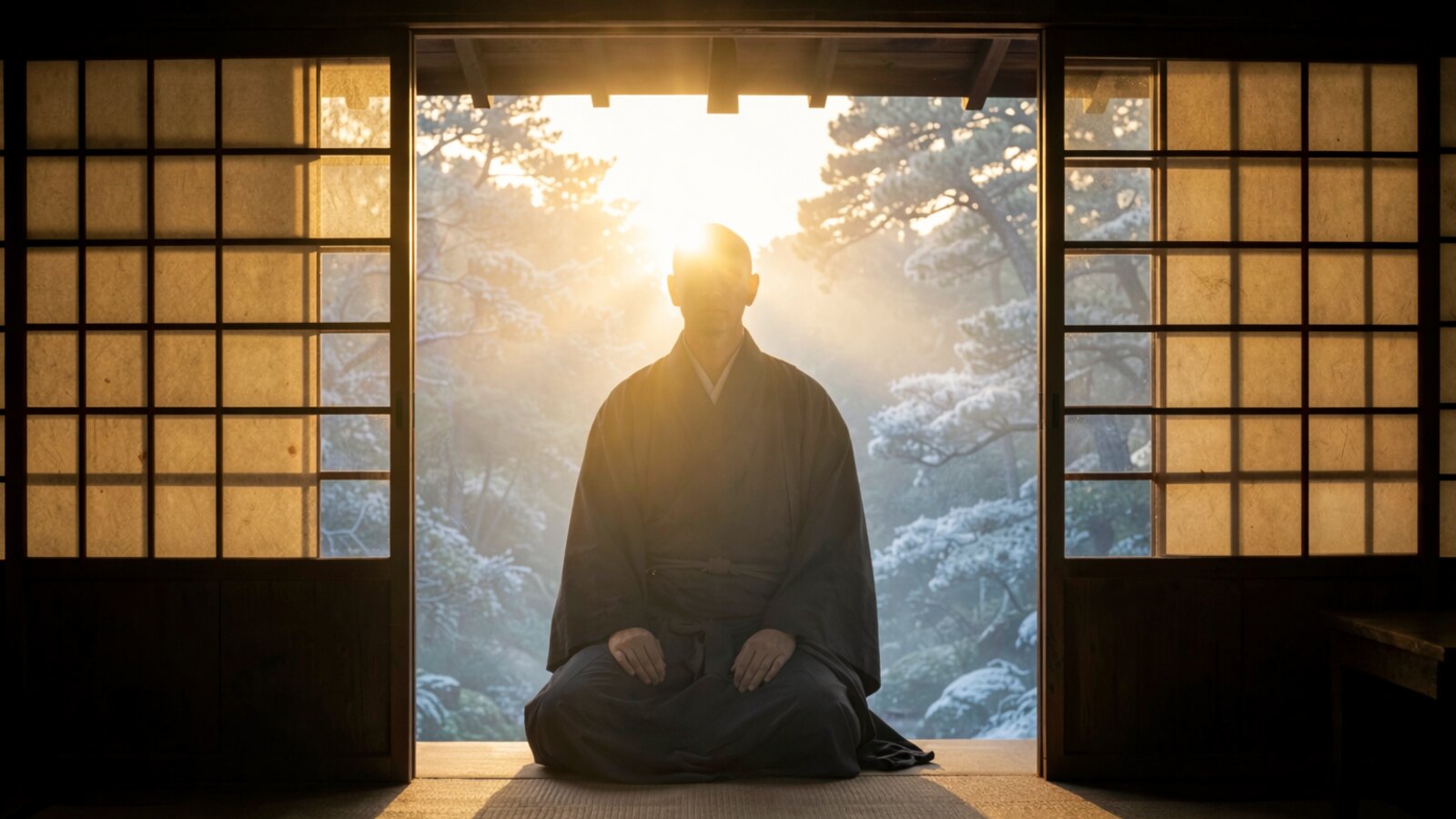
After: The cook would not sit down image for zen buddhism why your search for awakening is a trap

Why the question tormented him

Dōgen carried a question across the East China Sea that ruins a young person from the inside. He had inherited the standard Mahayana teaching: every being already possesses Buddha-nature. Awakening is not added to a person. It was never absent. Tendai monks on Mount Hiei had recited this doctrine in his ear since he took the robe at age thirteen.

Then why did the monks around him sit for hours every day in cold halls? Why did the masters speak as though something needed to be reached? Practice itself became unaccountable.

Anyone who has tried a contemplative discipline eventually feels this contradiction. You are told that the thing you want is already inside you. Then you are told to sit on a cushion at five in the morning and not move for forty minutes. Both instructions cannot be obvious at once. One of them must be wrong, or the relationship between them must be stranger than it looks.

The Japanese teachers Dōgen consulted handed him doctrines. None of them handed him a way through the knot. So he gambled the rest of his twenties on a sea voyage and the chance that someone in Song China had answered the question by living it instead of reasoning about it.

He boarded the ship at Hakata in the spring of 1223, twenty-three years old, with a small bundle of robes and the question burning a hole through every page of every sutra he carried.

After: Why the question tormented him image for zen buddhism why your search for awakening is a trap

What dropping off is not

The phrase he eventually became famous for, shinjin-datsuraku, body and mind dropped off, has been mistranslated for centuries into something it is not. So it is worth saying clearly what dropping off is not, before saying anything about what it might be.

Dropping off is not bliss. Dōgen left no surviving record of sweetness, light, or flood of love at the moment of his realization. The Hōkyōki notebook from his Tiantong years contains only Rujing's instructions and Dōgen's own questions about posture, breath, and the practice of zazen on a cold cushion.

Dropping off is not a vision. No figures appeared. No voice spoke from outside.

Dropping off is not a permanent state. Dōgen returned to ordinary monastic life the next morning, and the morning after, and for every morning of the twenty-five years he then spent writing.

Dropping off is not a graduation. Rujing confirmed the experience and immediately told him that the experience itself must also be dropped. The thing was not to be kept. It was not a trophy or a credential. Rujing sent Dōgen back to the meditation hall the same evening, to sit zazen with the other monks until the closing bell.

Something austere and precise survives all those negations. A self that had been scaffolded by the felt division between me here and world there lost the scaffolding for one suspended interval. Then it returned. The interval itself was not the point. The interval revealed how the rest of the day had been spent: inside that scaffolding, sweeping a corridor while watching for a corridor more important than the one underfoot.

After: What dropping off is not image for zen buddhism why your search for awakening is a trap

The morning sit, the cold floor

Translate this into a Tuesday morning in your own life and the strangeness sharpens.

The kettle ticks loudly in a quiet kitchen. Bare feet meet cold wood. You sit on a cushion flattened in the middle from the weight of a year of sittings. Your knees ache in the first three minutes. The breath is not deep or interesting. The breath moves in and out at the rate it has moved in and out for forty years, lifting the ribs perhaps half an inch.

According to the teaching Dōgen brought back, these twenty minutes are not preparation for an awakening that will happen later on a retreat, in a cave, after enough hours have been logged. These twenty minutes are the awakening itself. Awakening takes only one form in any actual life: a person doing one thing without trying to be elsewhere.

That is a far harder claim to live with than the bliss claim, because the bliss claim at least offers a payoff. Dōgen offers no payoff. He offers the cold floor, the aching knees, the unimpressive breath, and tells you that this is already the thing you crossed an ocean to find. There is no bigger thing further on. There is the cushion, the kettle still ticking from the boil, the gray light at the window above the sink.

Most mornings, this is unbearable to hear. That is also part of the teaching.

After: The morning sit, the cold floor image for zen buddhism why your search for awakening is a trap

Sweeping as scripture

The cook on the dock was not making a mystical point. He was making a household one. He was telling a clever young man that mushrooms in a bag, carried at midday, by an old man with sore feet, are not a lesser activity than dharma talk in a cool room. They are, in fact, the same activity, viewed without the mind that ranks activities.

A Sōtō teacher would later put it in the smallest possible image. To sweep a temple courtyard properly, you have to sweep this stone, then this stone, then this stone. You do not sweep faster because the abbot is watching. You do not sweep slower to look devout. You sweep the gravel that is in front of the broom.

The same applies to the kitchen sink at home, the spreadsheet at work, the spoon held to a parent's mouth in a hospice room. None of this is a metaphor for practice. None of it is a stand-in for the real thing happening on the cushion. It is the practice. The cushion is one of its forms. A bedpan is another. So is a child's hairbrush.

This is the part of Dōgen that the West has had the hardest time hearing, because the West tends to want spirituality to be elevated. He removes the elevation entirely. There is no high ground. There is only the next stone under the broom.

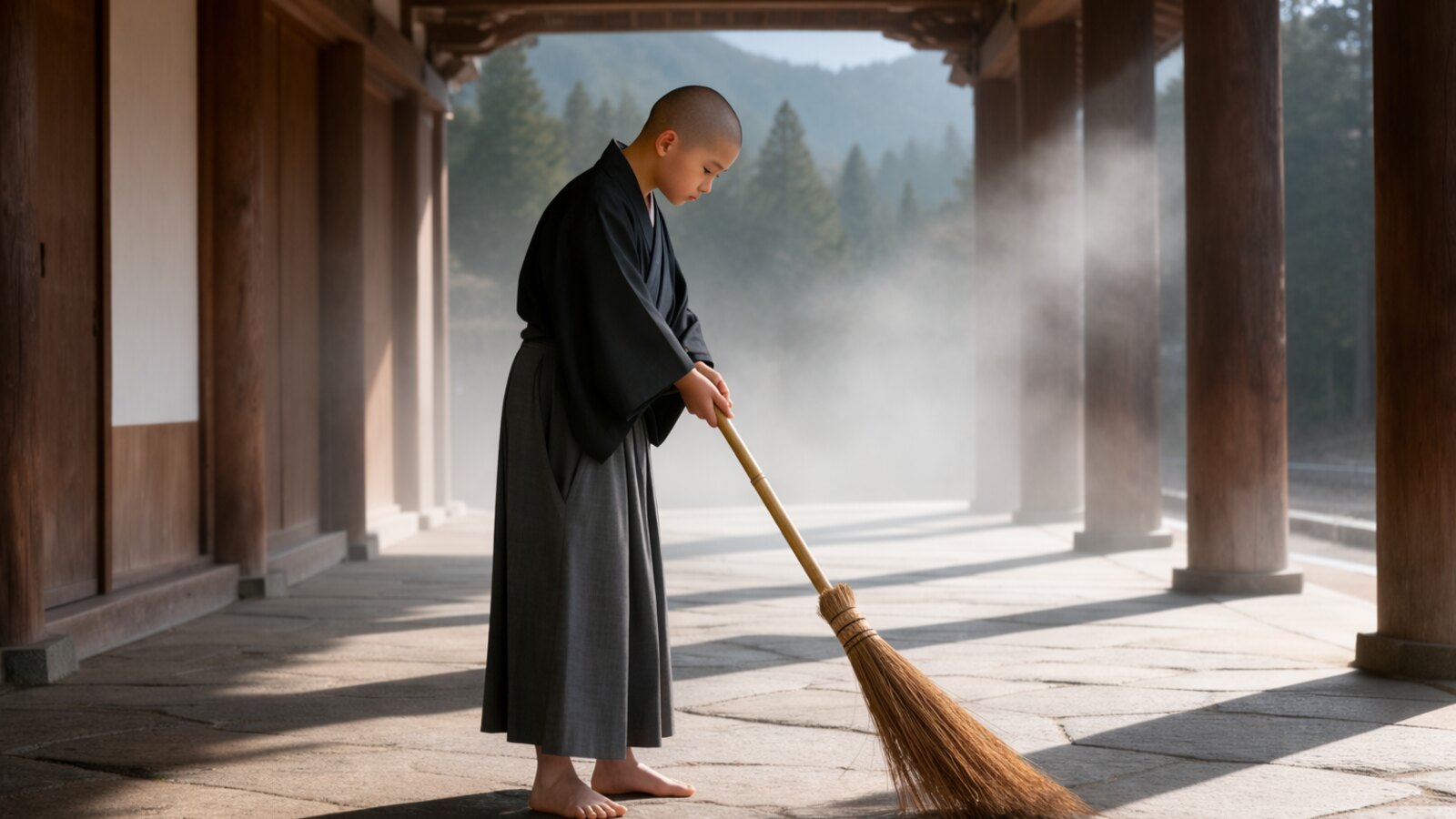
After: Sweeping as scripture image for zen buddhism why your search for awakening is a trap

The trap of the seeker

Now the trap can be named. The seeker collects experiences. The retreat in Thailand. The breakthrough on the third day of silence. The dream that felt different. The meditation where time vanished for ten minutes. Each one is filed in an interior cabinet labelled evidence I am getting somewhere.

Dōgen's whole later teaching can be read as an attack on this cabinet. The events are not the path. The cabinet is not the path. The act of collecting is, in fact, the precise mechanism that holds the seeker apart from the practice.

Rujing's instruction to drop the awakening too was not a piece of monastic etiquette. It was a clinical observation. If Dōgen kept the experience as an object, he would spend the rest of his life looking at the object instead of doing what the object had briefly shown him. He would become a connoisseur of his own past instead of a person sitting now.

This is the failure mode the cook had headed off two years earlier on the dock. The cook would not sit down because he understood, without needing the vocabulary, that to interrupt the mushrooms for the conversation was to put the conversation above the mushrooms. And to put the conversation above the mushrooms was to rebuild, in a single afternoon, the entire structure Zen exists to take apart.

After: The trap of the seeker image for zen buddhism why your search for awakening is a trap

Empty-handed

When Dōgen stepped back onto a Japanese dock several years later, he was asked what he had brought home from the great monasteries of China. No new sutras. No relics. No certificates of transmission to hold up.

He said, in his own words, that he had come back empty-handed.

People assumed for a while that this was modesty. It was not. It was the most accurate inventory he could give. He had brought back a question that had stopped functioning as a question, and a practice that consisted of doing whatever was in front of him without leaning toward something else. There was nothing portable in this. Nothing to display. Nothing to add to the temple library.

What he then proceeded to do was sit down in a small temple in the mountains and spend the next quarter of a century writing the Shōbōgenzō, ninety-five fascicles in vernacular Japanese, a work so dense that scholars are still arguing through its sentences eight hundred years later. The empty hands, it turned out, were full in a way the inventory of relics could not measure.

After: Empty-handed image for zen buddhism why your search for awakening is a trap

The next breath

The strangest thing about Dōgen is what he refused to do with his own awakening. A man who had heard, in a dark hall in Song China, a sentence that collapsed the division between him and everything else could have spent his life selling the experience. Recounting it. Promising it.

He did the opposite. He spent the rest of his days telling students that the experience was already over and was never the point. The point was the next sit. The next breath. The next stone under the broom. The mushrooms in the bag at noon.

You can put this article down now and find the next breath without going anywhere. It is already arriving. It does not require a cushion, a robe, a monastery, or a master shouting in the dark. It does not require the East China Sea. It is happening in your chest, at the edge of your attention, while your eyes finish this line.

That breath is what Dōgen carried back from China. He thought it was enough. He thought it was, in fact, everything.

After: The next breath image for zen buddhism why your search for awakening is a trap